For the Novi Sad conference on “The Theology of Dialogue”, 7-10 November 2012
By Jim Forest
Our conference topic is the theology of dialogue — a controversial subject among Christians for many centuries. Our faith requires us to love everyone, a commandment which implies communication, but it often seems we would rather not meet or talk to those to whom we are linked by the Gospel but who belong to different theological traditions. A visitor from another planet, observing inter-Christian relations, would quickly conclude that we Christians are more attached to our differences than we are to our similarities and that we do all in our power to prevent unity.
And yet, thank God, there is dialogue and it takes variety of forms, this conference being one example.
I want to talk about the inter-Christian dialogue that occurs less in spoken words than in “words” expressed in praxis, by which I mean activity that embodies basic elements of Christian faith. We Christians, divided in so many ways, may find it very difficult to agree about the eucharist, baptism, the number of sacraments, the filioque, justification and many other topics, but we agree that the Gospel calls us to love others, even our enemy, and to lay down our lives for our brothers and sisters if circumstances require it. On such areas of bedrock agreement, our disagreements can be put aside and acts of common witness occur that bear witness to the Gospel.
As an example of the inter-Christian dialogue of praxis, let me draw your attention to a martyr of modern times who, just eight months ago, was added to the Russian Orthodox calendar of saints. I am speaking about Alexander Schmorell, born in Russia on the 6th of September 1917, executed twenty-five years later on the 13th of July 1943 in Munich, Germany. My wife and I had the privilege to be present for his canonization in Munich this past February.
Were this conference happening in Germany I would not need to tell very much of his story. Alexander Schmorell was one of several Munich University students who, in the Hitler period, formed an anti-Nazi resistance group known as the White Rose. Today it would be hard to find a German over the age of twelve who hadn’t heard of the White Rose and wouldn’t recognize the names of Schmorell and the other five core members, all of whom were guillotined in 1943. Hundreds of streets, squares and parks are named in their honor. Postage stamps have celebrated their memory and movies have been made that put the drama of their lives on the screen. In Munich there is a museum in their memory. Alexander Schmorell is the first of the six to be formally recognized as a saint, an event that was given a great deal of news media attention in Germany.
But for us who are non-Germans, the White Rose martyrs are not so well known. What did they do? What makes them patrons of inter-Christian dialogue, and even dialogue that reaches beyond the borders of Christianity to other faiths?
In the spring and summer of 1942, while a medical student at Munich’s Maximilian University, Schmorell and two fellow students co-founded the White Rose. Schmorell was a member of the Russian Orthodox parish in Munich where he attended the Eucharistic Liturgy regularly; friends recall he always had a Bible with him. The other two founders were also devout Christians — Hans Scholl, a Lutheran, and Willi Graf, a Catholic. Together they participated in high-wire ecumenism in the midst of war and a ruthless dictatorship. Before long several others joined, including Hans Scholl’s sister, Sophie. At age twenty-one, she was the youngest member of the group and its only woman.
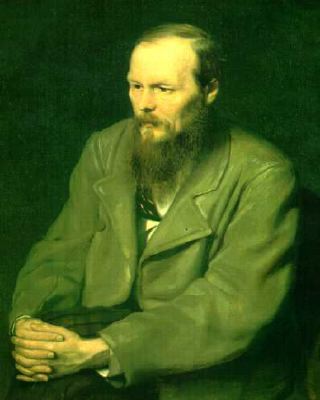
Why did the group christen their endeavor the White Rose? It was a name proposed by Schmorell. The reference was to a story by Dostoevsky, Schmorell’s favorite author. In one chapter of The Brothers Karamazov, “The Grand Inquisitor”, Christ comes back to earth, “softly, unobserved, and yet, strange to say, every one recognized Him.” He is suddenly present among the many people crowding Seville’s cathedral square, the pavement of which is still warm from the burning of a hundred heretics the day before. At this moment it happens that an open coffin containing the body of a young girl is being carried across the square on its way to the cemetery. They pass Jesus. “The procession halts, the coffin is laid on the steps at [Christ’s] feet. He looks with compassion, and His lips softly pronounce the words, ‘Maiden, arise!’ and she arises. The little girl sits up in the coffin and looks round, smiling with wide-open wondering eyes, holding a bunch of white roses they had put in her hand.” This merciful action completed, the Grand Inquisitor, having witnessed the miracle, orders Christ’s arrest. He is outraged at the boundless freedom Christ has given humanity.
In this remarkable story, the white rose serves as a paschal symbol, a sign of Christ’s victory over death. The adoption of the name White Rose was the group’s way of declaring their Christian conviction that He who has defeated death can also lift us from our graves — not only the grave to be dug at the end of our lives but the grave of fear and cowardice that we live in here and now.
What the White Rose members did was simple but astonishingly dangerous: they wrote, mimeographed and widely distributed a series of leaflets that called on ordinary people living in Hitler’s Third Reich to resist Nazism. This was civil disobedience at the most hazardous level.
How did a handful of students find the courage not only to open their eyes so widely to the hell which Germany had become, but decide it was worth risking their lives to call on Germans to take part in resistance?
First of all it came from the completeness of their faith. For them Christ was not a mythical figure from the past whose bones were carefully hidden by his disciples. He had given himself for the life of the world and on the third day had truly risen from the dead.
The actions of the White Rose also drew inspiration from a brave sermon given by August von Galen, Catholic bishop of Münster, in which he denounced Aryan racism and the Nazi euthanasia program that resulted in killing those regarded as unfit or unproductive. “These are men and women, our neighbors, our brothers and sisters!” von Galen declared. “Poor ill human beings. Maybe they are unproductive, but does that mean that they have lost the right to live? … If one adopts and puts into practice the principle that men are entitled to kill their unproductive fellows, then woe to all of us when we become aged and infirm! … Then no one will be safe: some committee or other will be able to put him on the list of ‘unproductive’ persons, who in their judgment have become ‘unworthy to live.’” (Von Galen spent the rest of the war under house arrest and was listed by Hitler for eventual execution following the anticipated Nazi victory. In 2005, von Galen was beatified by Pope Benedict XVI.)
The first White Rose action was clandestine distribution of von Galen’s sermon, a sermon which, needless to say, had been reported in no German newspaper.
In the first leaflet of their own authorship, the group declared, “It is certain that today every honest German is ashamed of his government. Who among us has any conception of the dimensions of shame that will befall us and our children when one day the veil has fallen from our eyes and the most horrible of crimes – crimes that infinitely outdistance every human measure – reach the light of day?”
The group’s second leaflet contained the only known public protest by any German resistance group specifically against the Holocaust: “By way of example we want to cite the fact that since the conquest of Poland 300,000 Jews have been murdered … in the most bestial way. Here we see the most frightful crime against human dignity, a crime that is unparalleled in the whole of history.” (In light of the final Holocaust death toll, the estimate of 300,000 seems relatively small. The same month the leaflet was published, June 1942, the “final solution to the Jewish question”— factory-style mass murder — began to be implemented.)
Theology not only motivated the group but was expressed in their texts. “Every word that comes from Hitler’s mouth is a lie,” declared the fourth leaflet. “When [Hitler] says peace, he means war, and when he blasphemously uses the name of the Almighty, he means the power of evil, the fallen angel, Satan. His mouth is the foul-smelling maw of Hell, and his might is at bottom accursed. True, we must consider the struggle against the National Socialist state with rational means; but whoever today still doubts the reality, the existence of demonic powers, has failed … to understand the metaphysical background of this war. … We must attack evil where it is strongest, and it is strongest in the power of Hitler.”
There were six White Rose leaflets in all. With each, circulation widened, distribution mainly in plain envelopes with typed addresses sent in small quantities from widely scattered post boxes. To get the leaflets into Austria, Schmorell made train trips to Salzburg and Vienna.
For nine months the Gestapo failed in its efforts to find those responsible for the leaflets. It was only on February 18, 1943, as Sophie and Hans were leaving copies of the latest leaflet in the atrium of their university, that they were spotted by a custodian and the Gestapo summoned. Another member of the group, Christoph Probst, was arrested soon after. Four days later the three they were both tried and beheaded. Probst was baptized a Catholic just a few hours before his death. Three other arrests and executions followed. Alexander Schmorell and Kurt Huber were beheaded on the 13th of July, Willi Graf on the 12th of October.
In his last letter to his family, Schmorell wrote: “This difficult ‘misfortune’ was necessary to put me on the right road, and therefore was no misfortune at all…. What did I know until now about belief, about a true and deep belief, about the truth, the last and only truth, about God? Never forget God!”
Thanks to a witness, we have an account of his last words: “I’m convinced that my life has to end now, early as it seems, because I have fulfilled my life’s mission. I wouldn’t know what else I have to do on this earth.”
At Schmorell’s canonization last February, the icon carried into the center of the church shows him as the tall, brown-haired young man he was, wearing the white robe of a physician with a Red Cross arm band, his left hand raised in a gesture of greeting, the other holding a thin blood-red cross with a white rose. He is standing against a gold-leaf background representing eternity and the kingdom of God.
Schmorell and his co-workers, in common with countless other brave Christians of the past century, provide an example of ecumenical witness to Christian values that transcends theological disagreements, encourages common action by Christians despite ecclesiastical divisions, and warms the climate for dialogue aimed at expanding areas of agreement and obtaining greater Christian unity. Those who follow the way of the Cross, not in theory but in praxis, are more likely to find the love that opens locked minds and institutional hearts, the love that breaks down the dividing wall of enmity.
* * *
Jim Forest is international secretary of the Orthodox Peace Fellowship and the author of numerous books.
* * *
No writer has explored more carefully than Dostoevsky the way a sin is justified in the doer’s mind before it is committed, the innate human urge to confess afterward, the struggle not to confess, and the healing made possible by confession — all lessons Dostoevsky learned in the crucible of life. A writer whose later work always had a religious core, he had found his way to faith the hard way.
In 1849, the 28-year-old Dostoevsky had been sentenced to death for his radical associations and activities in St. Petersburg. He was standing at the place of execution, in view of the firing squad, when his death sentence was commuted by the tsar. Days later, the hair shaven off one side of his head and wearing a convict’s black-and-white striped uniform, he was sent in chains to Siberia. On his way the wife of another convict managed to give him a copy of the New Testament along with a ten ruble note hidden in the cover. He kept the book with him for the rest of his life.
He spent the first four years “packed like a sardine” inside a vermin-infested prison barrack, a rotting building, stuffy in summer, freezing in winter, a world without any privacy or safety. He wasn’t permitted to write a single letter. Yet there was a certain blessing in his sojourn in the “lower depths,” a term often used by radical Russian intellectuals who contemplated the ordinary people — the narod — from a safe distance. Tolstoy might occasionally labor with his peasants and wear similar clothing, but at night he slept on silk sheets. Dostoevsky lived and slept among some of Russia’s poorest day and night for years. Among the “unfortunate ones,” as Russians often called those in prison, he rethought the foundations of his life.
A religious awakening occurred. He began to consider that the Gospel might be true and that the Church — the guardian of the Gospel — might be something more than a social institution whose main task was blessing the tsar and the activities of the state.
Finally allowed to engage in correspondence in 1854, he related to a friend how he had come to thirst for faith “as withered grass thirsts for water”:
I’m a child of the age, a child of doubt and unbelief, and even, I’m certain, till the day they close the lid of my coffin. What terrible torment this thirst to believe has cost me and is still costing me, the stronger it becomes in my soul, the stronger are the arguments against it. And despite all this God sends me moments of great tranquility, moments during which I love and find I am loved by others. It was during such a moment that I formed within myself a symbol of faith [In Orthodoxy Christianity, the Creed is referred to as “the symbol of faith”; the Greek word “symbol” means “that which brings together.”] in which all is clear and sacred for me. The symbol [creed] is very simple, and here is what it is: to believe that there is nothing more beautiful, more profound, more sympathetic, more reasonable, more courageous, and more perfect than Christ; and there not only isn’t, but I tell myself with a jealous love, there cannot be. More than that — if someone succeeded in proving to me that Christ was outside the truth, and if, indeed, the truth was outside Christ, I would sooner remain with Christ than with the truth. [Selected Letters of Fyodor Dostoyevsky, translated by Andrew MacAndrew, edited by Joseph Frank and David Goldstein, Rutgers University Press, 1987; letter to N.D. Fonvizina, p. 68. One finds a similar passage in a notebook entry written in 1881, the year he died: “I believe in Christ not like a child. My faith came through the crucible of doubts.”]
It is in his Siberian years that the novels of his later life have their roots.
In Crime and Punishment, Dostoevsky’s central figure is Raskolnikov, a sullen student living in a shabby rented room in St. Petersburg. He regards himself as modern, belonging to a new age in which God and compassion have been banished by science. Penniless, he is obsessed with loathing for a moneylender to whom he is in debt and slowly becomes a murderer in his imagination. It occurs to him that murder is not always regarded as a crime — those who commit crime on a huge scale, people like Napoleon, are regarded as national heroes, benefactors of humanity and giants of history despite the desolation and carnage they instigated. Such supermen, refusing to be shackled by mere morality, “make a new law by transgressing an old one.”
Raskolnikov decides that by killing the moneylender, a selfish old woman whom no one will mourn, he would be saving many families “from destitution, from decay, from ruin, from depravity” while at the same time relieving his own poverty. He imagines that afterwards, liberated from destitution with the money he has obtained from the chest in her bedroom, he will be free to “devote himself to the service of humanity and the common good.” In such a case, he reasons, murder, far from being a sin, would be just and good. “One death for hundreds of lives — it’s simple arithmetic!”
Yet when he commits his carefully-planned and philosophically-justified murder, things do not go entirely as intended. He kills the money-lender but discovers a simple-minded young woman, Lizaveta, has witnessed his deed and so murders her as well so that she cannot testify against him. The hatchet Raskolnikov had hidden in his jacket is now reddened not only with a miser’s blood but also that of a saintly innocent who never harmed or hated anyone. [Dostoevsky identifies Lizaveta as a yurodivi — a Holy Fool or Fool-of-Christ, a kind of saint much loved by many Orthodox Christians.]
He has been clever in committing his crime. No trail of clues connects him to the two dead women. Even so an intuitive policeman, Porfiry Petrovich, finds more and more reasons to regard Raskolnikov as the guilty one. Petrovich sees Raskolnikov’s nearly dead soul — his heart “chafed by theories” — and understands that this young man’s only hope is confession and repentance. He plays a part in rescuing Raskolnikov from the hell into which he has locked himself. Porfiry Petrovich is able to say to Raskolnikov that “God is waiting for you” and to tell him that the suffering he will have to endure as a prisoner can be, after all, a good thing. He points out to Raskolnikov that his crime, terrible as it was, might have been worse: “If you’d come up with a different theory, you might have done something a hundred million times more hideous!” He delays arresting Raskolnikov in the hope that he will “become like a sun” and confess.
But Raskolnikov’s principal rescuer is Sonya, a young woman of deep Christian faith who has become a prostitute for the sake of her impoverished family’s survival. When at last Raskolnikov admits to her his terrible secret, it is Sonya who tells him that his only hope is confession — confession to God, to the police, to a priest, to everyone.
“What to do?” she exclaimed, suddenly jumping up from her place, and her eyes, still full of tears, suddenly flashed. “Stand up!” (She seized him by the shoulder; he rose, looking at her almost in amazement.) “Go now, this minute, stand in the crossroads, bow down, and first kiss the earth you’ve defiled, then bow to the whole world, on all four sides, and say aloud to everyone: ‘I have killed!’ Then God will send you life again. Will you go? Will you?”
Sonya has a copy of the New Testament from which she used to read aloud to Lizaveta. Raskolnikov asks her to read to him from the same book. She turns to the eleventh chapter of John’s Gospel but at first has difficulty making any sound, she is so overcome with emotion. Finally she starts reading: “Now a certain man was sick, named Lazarus, of Bethany …” It is the story of Jesus’ friend who died and four days later, within his tomb, was called back to life. Jesus asks Martha if she believes in the resurrection of the dead. She says she believes her brother will be raised back to life at the end of time. Jesus responds, “I am the resurrection and the life.” Sonya by now is reading with strength her voice, as if she herself were Martha: “Yes, Lord, I believe that you are the Christ, the Son of God …”
Sonya assures Raskolnikov that his only hope is to confess, accept suffering and thus redeem himself. Otherwise, though outwardly free and part of normal society, his unspeakable secret will cut himself off from everyone around him, even his mother and sister.
Raskolnikov realizes that in confessing the truth to Sonya, a door has opened at least a crack. They sit
side by side, sad and crushed, as if they had been washed up alone on a deserted shore after a storm. He looked at Sonya and felt how much of her love was on him, and, strangely, suddenly felt it heavy and painful to be loved like that. Yes, it was a strange and terrible feeling!
She offers Raskolnikov a small cross that had belonged to the murdered Lizaveta and promises him to share in his suffering and to help him bear his cross. Lizaveta’s cross is a gift he cannot yet accept, nor is he yet capable of surrendering to Sonya’s counsel. In the days that follow he considers escaping to America. At other moments he contemplates suicide. But finally he goes to the police station and confesses the double murder.
The punishment for murder in late-nineteenth century Russia was not execution but imprisonment and hard labor in Siberia. Raskolnikov gets a relatively short sentence — eight years, the length of Dostoevsky’s own period of imprisonment and exile. The judge explains it would have been a longer sentence, but he has taken note of the fact that Raskolnikov made no effort during his trial to excuse himself on the basis of illness or temporary insanity nor ever used any of the stolen money for his own benefit. There was also the factor of several persons testifying on his behalf about ways he had helped them.
Sonya eventually follows him to Siberia, living not far from the prison and doing all she can to help not only Raskolnikov but also other “unfortunate ones.”
It is while in prison, a year after his conviction, that the full horror of his two murders dawns on him. Real repentance begins and with it floods of tears.
In the last paragraph of Crime and Punishment, Raskolnikov is holding the New Testament in his hands, a book he had been keeping under his pillow but not yet opened.
He took the book out mechanically. It belonged to her, it was the same one from which she had read to him about the raising of Lazarus. At the beginning of his hard labor he had thought she would hound him with religion, would be forever talking about the Gospels and forcing books on him. But to his greatest amazement, she never once spoke of it, never once even offered him the Gospels. He had asked her for it himself … and she had silently brought him the book. He had not even opened it yet. Nor did he open it now, but a thought flashed in him: “Can her convictions not be my convictions now?”
While compressing a large and complex novel into a few pages oversimplifies the spiritual struggle at the heart of the book, even told in brief one can understand how Sonya’s wisdom and love are enough to bring about Raskolnikov’s conversion. More than any other person, she helps him understand that there is no alternative to confession and repentance. With these the doors of the kingdom of God can open even for a man in prison who has committed one of the worst of sins. For the first time since childhood, Raskolnikov experiences inner freedom even though he has seven more years to serve.
The Brothers Karamazov, Dostoevsky’s last novel, provides the author with another opportunity to explore the themes of sin and repentance, doing so on an even larger canvas than Crime and Punishment. Again the pivotal event is murder — an act of patricide by one of the sons of Fyodor Karamazov, a jeering, cynical man of unbridled lust and greed.
What we are starkly confronted with in the Karamazov brothers are very different human types.
There is Alyosha, the youngest, who has miraculously emerged from the moral squalor of his father’s home with a purity of heart and compelling directness most people relinquish in adolescence. This is due in great measure to vivid memories of his mother, who before her early death held him in her arms before her icon of the Mother of God and the Christ Child, praying with tears for Alyosha’s protection.
In the period described in the novel, Alyosha has become a novice at the local monastery, assigned to care for Father Zosima, a saintly monk who hears the confessions of countless pilgrims. The Christ-like Alyosha is able to visit his father and listen to him ridicule Christianity in general and monastic life in particular without rising to the bait. He is one of the rarities in the human race who has no need to defend himself or his faith. [The figure of Fr. Zosima was inspired in part by Father Amvrosi, a monk at the Optina Monastery, confessor to countless people. Dostoevsky had gone to see him in 1878 when grieving the death of his two-and-a-half year old son, Aleksei. Amvrosi was canonized by the Russian Orthodox Church in 1988. Another model for Zosima was a bishop of the eighteenth century: St. Tikhon of Zadonsk.]
Then there is Ivan Karamazov with his diamond-hard intellect, a scholar with acute but abstracted analytical powers, who seems to be seeing the earth and its people not from where he stands but as if he were watching by telescope from the moon. He is an expert on religion, especially Orthodox Christianity, and his widely-read essays are even admired by the monks at the local monastery. They assume he is an believer, yet in fact Ivan is an atheist, rejecting God so long as there is a single child suffering from incurable illness. He is the sort of atheist who is so obsessed with the God to whom he objects and revolts against that he is as God-haunted as the devout Alyosha. For Ivan, God is a problem of the mind, for Alyosha a presence in the heart. Alienated Ivan is among those laying the foundations for the terrifying revolution to come only a few decades later — one of those idealists who hope, as Father Zosima says, “to make a just order for themselves but, having rejected Christ, will end by drenching the earth with blood.” [p 318]
In the eldest brother, Dimitri, we meet a poetic, impulsive young man who has inherited his father’s sensuality but not his greed or cunning. He is passionately in love with Grushenka, a capricious and manipulative local beauty — a woman who has also caught the eye of the elder Karamazov, so that we find father and son competing with each other for her attention, with father having the advantage of wealth, the son the advantage of youth. Dimitri is an image of the tragic sinner Christ loves and readily forgives in response to the tiniest gesture of repentance. He is someone who might bathe Christ’s feet with his tears. “Lord, I am loathsome,” Dimitri cries out, “but I love you! If you send me to hell, even there will I love you.” [p 412]
Finally there is a fourth son, Smerdyakov, son of a simple-minded girl who hardly knew her name, fathered by Fyodor Karamazov when he happened upon Lizaveta one night and raped her. He never confessed his deed and thus never acknowledged Smerdyakov as his son, but following Lizaveta’s death in childbirth, allowed his servant Grigory and his wife to care for the boy, who grew up to become another of his father’s servants. The bitter and withdrawn Smerdyakov has known even less love than the legitimate sons of Karamazov.
By the time the elder Karamazov is murdered, we know the brothers well enough to understand that each of them except Alyosha had a homicidal motive, and understand why it is that even Alyosha feels implicated in his father’s murder, for he has learned from Fr. Zosima that “each is guilty of everything before everyone, and I most of all.”
Finally Dimitri is accused and arrested on the basis of circumstantial evidence. “I am not guilty of my father’s blood,” declares Dimitri when charged, yet he concedes his arrest is just spiritually. “I accept punishment not because I killed him, but because I wanted to kill him, and might well have killed him…” [p. 509] Only later does it become clear who really committed the act and how cunningly it was planned.
The reader also comes to understand that Ivan, though he did not commit the murder, is the crime’s intellectual author. It was Ivan who convinced the murderer that, as there is no God, there is no sin. Now he discovers that ideology can be as deadly as an axe.
In one of the pivotal moments in the book, we find Alyosha talking with Ivan, now on the verge of madness, about the huge guilt he senses has taken hold of Ivan. Alyosha suddenly turns to Ivan and says: “It was not you who killed father … You’ve accused yourself and confessed to yourself that you and you alone are the murderer. But it was not you who killed him, you are mistaken, the murderer was not you, do you hear, it was not you! God has sent me to tell you that.”
Alyosha does not mean that Ivan is blameless of their father’s death. In assuring Ivan that it was “not you,” Alyosha wants his brother to understand that what he has done was the result of a demonic spirit at work within him rather an action of his essential self. Should Ivan confuse the evil he has done with his deepest self, he will have damned himself and may never find his way out of the despair that results. Alyosha’s message is a desperate effort to save Ivan’s sanity and soul.
Demonic possession was a theme that Dostoevsky explored in Demons, sometimes translated as The Possessed, yet in this novel we meet no demons as such — only people possessed by radical ideas and ideologies. Demons become visible, writes Dostoevsky translator Richard Pevear, “only in distortions of the human image, the human countenance, and their force is measurable only by the degree of the distortion.” [from the foreword to the Pevear-Volokhonsky translation of Demons: Knopf, 1994]
The demons in Dostoevsky’s novels operate via all the isms that flooded across Russia in the nineteenth century: idealism, rationalism, empiricism, materialism, utilitarianism, positivism, anarchism, socialism, and, common to them all, nihilism and atheism. Demons — invisible spirits serving Satan, the father of lies — discovered many nineteenth century intellectuals were more vulnerable to idealistic theories and slogans than to wealth or other traditional temptations that had worked so well with their parents. Evil ideologies invade a person, pervert him, gradually driving him to crime, insanity or both.”It was not you who ate the idea,” says one of one of the novel’s principal figures, Pyotr Verkhovensky, “but the idea ate you.”
“If we call Satan the father of lies, I think we begin to understand that evil is rooted in untruth, denial of the Truth, in deception, and that here is where we find the skin next to the skin of our sin,” writes my friend Alice Carter:
Denial of Christ is denial of Truth, to deny His Resurrection propels us into sin — sin which is the only response to seeing death as the end. If death is the end, attention to my biological needs is my first priority: my needs over everyone else. Any injustice, any crime can be tolerated and is really unavoidable, in this perception. My survival is first. The end justifies the means. And in a world without God, as Dostoevsky tells us, anything is possible, everything is permitted. What can prevent our murderous actions from overwhelming and destroying the earth?
Dostoevsky was no Manichean envisioning God and Satan as equally-matched warring twins. His experiences while a prisoner had shown him that evil was not on an equal footing with good, that demons are capable only of destruction, not creation. Made in God’s image as we are, evil can never be the essence of any person, even the most damaged, the most sinful, the most possessed. However weakened by habitual sin, each person retains to his last breath the freedom to turn from evil, to confess and repent. “Never confuse the person, formed in the image of God, with the evil that is in him, because evil is but a chance misfortune, illness, a devilish reverie,” said Dostoevsky’s contemporary, St. John of Kronstadt. “But the very essence of the person is the image of God, and this remains in him despite every disfigurement.”
Coping with disaster in his own life, Dostoevsky had come to realize that God is both our private salvation and the only source of social cohesion. We live a different life if we know we are made by God, bear the Divine image, and that each of us — and all of us — is accountable to God. To deny God is a form of suicide and at the same time the cause of social disintegration and mass murder.
In place of demonic ideas and ideologies, there is the reality of God’s creation and of the person. There is the saving mystery of beauty. Thus we find Dostoevsky’s heroes in sacramental moments kissing the earth and watering it with their tears. This is what Sonya proposed Raskolnikov do at the four crossroads and is what happened to Alyosha after the death of his saintly mentor, Fr. Zosima:
He did not stop on the porch, either, but went quickly down the steps. Filled with rapture, his soul yearned for freedom, space, vastness. Over him the heavenly dome, full of quiet, shining stars, hung boundlessly. From the zenith to the horizon the still-dim Milky Way stretched its double strand. Night, fresh and quiet, almost unstirring, enveloped the earth. The white towers and golden domes of the church gleamed in the sapphire sky. The luxuriant autumn flowers in the flowerbeds near the house had fallen asleep until morning. The silence of the earth seemed to merge with the silence of the heavens, the mystery of the earth touched the mystery of the stars … Alyosha stood gazing and suddenly, as if he had been cut down, threw himself to the earth.
He did not know why he was embracing it, he did not try to understand why he longed irresistibly to kiss it, to kiss all of it, but he was kissing it, weeping, sobbing, and watering it with his tears, and he vowed ecstatically to love it, to love it unto ages of ages. “Water the earth with the tears of your joy, and love those tears…,” rang his soul. What was he weeping for? Oh, in his rapture he wept even for the stars that shone on him from the abyss, and “he was not ashamed of this ecstasy.” It was as if threads from all those innumerable worlds of God all came together in his soul, and it was trembling all over, “touching other worlds.” He wanted to forgive everyone and for everything, and to ask forgiveness, oh, not for himself! but for all and for everything, “as others are asking for me,” rang in his soul. [p. 362]
* * *
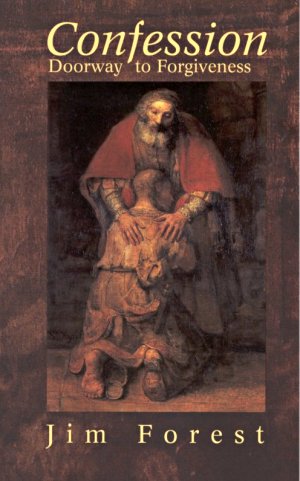
a chapter from Confession: Doorway to Forgiveness by Jim Forest (Orbis Books)
* * * The Thanatos Syndrome
by Walker Percy
Farrar Straus Giroux, New York. 1987, 372 pp
* * *
reviewed by Jim Forest
Walker Percy is southern and Catholic, Kurt Vonnegut northern and secular, not minor differences, but perhaps they recognize each other as relatives. Both are inclined to use comedy, at times the slapstick variety, in order to talk about some of the unfunniest subjects in the world, like war, euthanasia, abortion, and other justifications we cook up for killing one another.
Percy’s hero in this book, as in his earlier novel, Love in the Ruins, is Dr. Thomas More, resident of a rural Louisiana parish (what we Yankees call a county) and a direct descendant of St. Thomas More. Like his ancestor, he has been a prisoner, but for selling amphetamines to truckers rather than for acts of fidelity to conscience. Also like his ancestor, he is a Catholic, except in the current generation, things being what they are, More’s connection to his Church is threadbare. Still there is a bit of religious glue holding body and soul together. Tom More isn’t able to make himself comfortable with the contemporary mercies that pave the way to the gas chamber and the abortorium.
In The Thanatos Syndrome we encounter a few psychiatrists who makes heaps of money running the Qualitarian Center, where the old and/or feeble-minded are provided with Death with Dignity. In their spare time, using a federal grant, the clever doctors are in the midst of a local experiment that they regard as the best idea since fluoride in toothpaste. While sticking to bottled water for themselves, they are lacing the parish water supply with a substance (borrowed from a nearby nuclear generator) that knocks out the part of the brain that makes people dangerous and miserable. Violent crime has evaporated in the area effected. Black prisoners are singing the old spirituals as they cheerfully pick cotton on the local prison farm. Sexual-transmitted diseases have practically disappeared. No more AIDS, no more herpes.
At first glance it looks like the doctors have found a chemical method to mass produce the lifestyle of the saints. People drinking the local water aren’t inclined to do the sorts of things that make headlines in The National Enquirer.
But not quite. It turns out that adults who drink too much of the local water find that the ideal sex-partners are children.
The part of the brain made dormant also happens to be where the soul and conscience hang out. It is the patch that has most to do with creativity, verbal skills, and what makes us who we are. Those drinking the local water are better at telling you exactly where St. Louis is than in making a sentence that includes a subject, verb and object. They are a whiz at bridge but incapable of theology.
Percy links what is now happening in manipulative medical technology in the US and what was going on with psychiatry in Germany from the twenties until the collapse of the Nazis, at the same time pointing out that you don’t have to like Hitler (the German shrinks didn’t) to end up doing some of the worst things that happened in Hitler’s Germany.
Percy integrates a steady stream of observation about the American Way of Life and what is like living in “the Age of Not Knowing What to Do.” For example here is Tom More reflecting about a patient who, before the local water ironed out all depression and anxiety, felt like a failure:
“What is failure? Failure is what people do ninety-nine percent of the time. Even in the movies: ninety-nine outtakes for one print. But in the movies they don’t show the failures. What you see are the takes that work. So it looks as if every action, even going crazy, is carried off in a proper, rounded- off way. It looks as if real failure is unspeakable. TV has screwed up millions of people with their little rounded-off stories. Because that is not the way life is. Life is fits and starts, mostly fits.”
Percy continues his assessment of contemporary American Catholicism that began in Love in the Ruins. Fr. Kev Kevin, the former director of the Love Clinic, has abandoned the controls of the Orgasmatron computer and given up the priesthood as well. He is “into Hinduism,” has married a former Maryknoll nun who is taking up witchcraft, and together they run a marriage encounter center in a rehabilitated stable.
In The Thanatos Syndrome we meet a very different kind of priest: Fr. Simon Smith, a modern stylite, fasting atop a fire-watch tower as the book begins. People consider him crazy as a loon. Maybe he is, but he’s a saint as well. His “confession” is the keystone of the novel. Here we discover that his vocation is an on-going penitential work having chiefly to do with the devastation his father helped bring about in Europe — he is the son of one of the liberal German physicians (anti-Nazis one and all) whose work to “relieve suffering” via euthanasia helped prepare the way for the Holocaust.
Father Smith’s big discovery in life was that “the only people I got along with were bums, outcasts, pariahs, family skeletons, and the dying.” It isn’t a boast. “I don’t know about Mother Teresa, but I [did what I did] because I liked it, not for love of the wretched … dying people were the only people I could stand. They were my kind … Dying people, suffering people, don’t lie.”
Ivy Troutman (photo courtesy of the New York City Public Library)
As a boy growing up in Tinton Falls, New Jersey, I added to my dollar-a-week allowance by delivering morning and evening newspapers. My most remarkable customer was Ivy Troutman, who in earlier years had played starring roles in many Broadway plays and also, in 1915, been in at least one silent movie. A famous beauty in what she referred to as her “salad days,” she was still stunning in her sixties.
In 1951, Ivy purchased a run-down mansion on Newman Springs Road, a short walk from our house. Built in the mid-19th century, shortly after the Civil War, Ivy presided over a restoration that transformed the near-ruin into a palace.
For some reason, she took a special liking to me. The result was that I put Ivy at the end of my newspaper route, as she often invited me to stay for a while. Serving me a small glass of Dubonet (imported from France, but with water added in deference to my age), she often talked about her days as an actress. Her career on stage had stretched from 1904, when she was 21, to 1942.
The First World War took her to Europe to perform for the troops. After the war ended, she joined the colony of American expatriates living in Paris, thus becoming one of the “lost generation,” a term coined by Gertrude Stein (whom Ivy knew but didn’t much like) and popularized by Ernest Hemingway.
Among Hemingway’s best friends was Ivy’s former husband, the artist Waldo Peirce, a fellow American who, along with Hemingway, had been an ambulance driver in France during the war.
During her Paris years, Ivy had been a close friend of James Joyce. Perhaps the greatest treasure in her treasure-filled house was a copy of the first edition of Joyce’s Ulysses, published by Shakespeare & Company — Joyce had penciled in corrections on nearly every page. Ivy sometimes went to Manhattan for meetings of the Joyce Society. Its gatherings were on West 47th Street, over the legendary Gotham Book Mart, which later, when I moved to New York, became one of the book stores I visited most often.
Ivy had a breath-taking art collection. I found especially fascinating a small Alexander Calder mobile hanging in the living room and, in a hallway, one of Calder’s large single-line circus drawings.
Occasionally Ivy had parties — soirees — for friends living in New York. Though Ivy had a maid, I was asked to put on my Sunday best and serve drinks. The guests were mainly theater people. One of the regular guests was Raymond Burr, eventually to become best known for playing lawyer Perry Mason on a popular TV series.
There were also writers. Ivy introduced me to one of them, Allen Churchill, who at the time was researching a history of New York’s Greenwich Village eventually published as The Improper Bohemians. Meeting an actual author made a huge impression on me.
When I was fifteen, I moved to Hollywood, California, and lost touch with her, but I think of her often with profound gratitude for all the windows she opened in my life and for taking me so much to heart.
Waldo Peirce – Ivy Troutman & himself in Maine
The only material gift from her that I still have is a delightful watercolor by Waldo Peirce. Peirce himself is on the left, manfully cutting down a tree, Ivy seductively reclining on the right, and the Maine wilderness, in which Peirce had grown up, in the background. It hangs in our living room.
Life is a maze in which we take the wrong turn before we have learnt to walk. — Cyril Connolly
What could be more delightful than to have in the same few minutes all the fascinating terrors of going abroad combined with all the humane security of coming home again? — G.K. Chesterton, Orthodoxy
What we call the beginning is often the end, and to make an end is to make a beginning. The end is where we start from. — T.S. Eliot
The Archangel Michael, as Henry Adams observed, loves heights. Fortress-like churches dedicated to the heavenly warrior have often been built on forbidding pinnacles of rock. The most famous, Mont-Saint-Michel, is poised atop a dagger of stone on the tidal flatland just off the southwest coast of Normandy near the border of Brittany. When the tide is up, the abbey is like a magnificent ship anchored offshore. Both location and architecture suggest a readiness to withstand the sieges of armies and the elements. The fortifications may have helped ward off Vikings, but have also made it a major attraction for tourists and pilgrims.
The Virgin Mary seems to prefer more vulnerable locations. In her case, rarely do any remarkable obstacles impede the pilgrim’s way. Take the example of the Cathedral of Our Lady at Chartres, one of the most important centers of pilgrimage in Europe, whose town is set amidst a vast moat of wheat fields.
There has been a church in Chartres dedicated to Christ’s mother at least since the fourth century, when St. Adventinus was the local bishop. Stonemasons have labored on the site again and again. Work on the main part of the present church began in 1194 after a fire destroyed a smaller cathedral. Thanks in large measure to the many thousands of pilgrims who came annually to make a gift of their labor, most of the construction was finished by 1230. The cathedral at Chartres is not only a goal of pilgrimage, but a work of pilgrimage.
These days most pilgrims arrive in Chartres by train, car or bicycle, but even in secular, post-modern Europe there are those who still make the journey on foot. No matter what their mode of travel, pilgrims look eagerly toward the horizon waiting for the grey profile of the cathedral to rise above the grain. For those traveling in groups, there is often a spire-spotting contest. When we were traveling by rented car on our last visit to Chartres, our daughter Anne won a coin for being first to spot those two arrow-sharp towers.
Approaching Chartres through the wide plain of surrounding fields, the hill on which the town and cathedral are built gradually reveals itself. From every vantage point, the cathedral dominates the view, its two great towers rising heavenward from the heart of the town. The cathedral’s spires have a magnetic strength, compelling the pilgrim to make no other stop before reaching the church and entering the western doors — the Royal Portal — that stand between the towers.
Stepping inside the church, the pilgrim stands within in an immense enclosure that seems to be an entrance point to the kingdom of God. The immense, softly-lit, column-lined space is a domain in which ordinary time hardly exists and doesn’t matter. One’s first impression is of a tremendous silence, even among whispered conversations or a softly chanted Mass. The 176 windows — among the best preserved medieval glass the world possesses — are a Bible written in fragments of colored glass. Red and blue are the most dominant: the colors of ice and fire. Others play supporting roles: deep forest green, pale lilac, lemon yellow; all enhanced by ebony lines glazed to the glass to provide image details and the black tracery of lead connecting the pieces.
Those who are drawn to Chartres, whether they see themselves as pilgrims or simply as tourists, often spend many hours “reading” the windows panel by panel and derive the satisfaction of breaking a code as they work out the meaning of each. Camping of the edge of town as our family did during our last visit to Chartres, we stopped one morning at a local camera shop to buy a pair of binoculars, eager to get closer to the glass. We wondered if our ancestors, who read less or not at all, might not have had better eyes for distance vision and thus found it easier to decipher the glasswork.
The windows are a kind of giant puzzle for the eyes and mind. Little by little one sees how all the panels connect — how the story in one panel is threaded to the next, each window in dialogue with its neighbors.
“It’s a giant comic book,” our daughter Anne commented. She was right, so long as one understands “comic” not as a synonym for funny, but in the sense of Dante’s divine comedy.
At the heart of the cathedral, as in every church with a eucharistic tradition, is its main altar. Each altar is a center of the universe. Each altar is a table of divine hospitality. The altar is a place where a frequent miracle occurs — bread and wine become the body and blood of Christ. Christ is both hidden and revealed in the most basic of foods.
At the foot of the central aisle that leads toward the main altar is a treasure that visitors often walk over without noticing: a circular maze. It’s the cathedral’s most abstract work of art and the only one designed as much for the feet as for the eye. The mosaic maze is more than thirteen yards from edge to edge, the width of the pillar-bordered avenue that leads to the altar.
Unlike the labyrinth in ancient Crete, where the hero Theseus conquered the Minotaur and cleverly found his way out by following the thread given him by Ariadne, the maze at Chartres is not life-threatening. Its “walls,” traced in black stone, rise only in the imagination. The unicursal path of white stone has no blind alleys, traps, pits, dead ends or secret chambers. If you wish, there is nothing to stop you from walking straight to the center without bothering to follow the path, but something deeply rooted in human nature makes even the casual visitor carefully follow the white track, treating the black lines as impassable barriers. An occasional pilgrim makes the journey on penitential knees, but the majority walk upright. Either way, it’s a reassuring experience. While there are many twists and turns, with the pilgrim often being led away from his goal, whoever stays on the path ultimately reaches the center.
The unicursal journey, with all its detours, condenses the lifelong quest to achieve union with God. It’s a simple model of each person’s journey of faith. The destination at the center represents the most holy of pilgrimage goals: Jerusalem.
Even if the pilgrim cannot lose his way in the Chartres maze, what appears at first glance to be a simple walk within a circle shows itself to be the way of the cross. The path’s many turnings occur around a cruciform pattern. The maze entrance — symbolic of baptism — seems to lead directly to the center but abruptly branches off to the left. Then, where the left arm of the cross would be, the path doubles back, soon returning the walker to the path heading toward the center, but instead only grazes the innermost circle before going outward again. One reaches the maze’s center point — Jerusalem with its empty tomb — only after making a grand tour of the entire circle, with all its sudden turns, a process achieved simply by carefully placing one foot in front of the other, staying on the path, making turns that form the pattern of the life-giving cross.
The maze at Chartres is circular. The circle — a line without beginning or end — is a symbol of eternity. The same symbol is used in Christian iconography to form the halo, the sign that someone has become whole: a new person transformed in Christ-revealing, self-giving love and, united with Christ, now experiencing eternal life.
The circular, cross-containing maze is a simple map of the path to sanctity, a wordless image of the New Testament. Its message: Follow the path of the gospel, and the mercy of God will finally bring you to the heavenly Jerusalem, the kingdom of God, no matter how many turns you make along the way or how many times your goal may seem to recede. Along the way you will discover, and even carry, the cross; but the cross contains the resurrection — life with Christ and all the saints in the new Jerusalem.
Patriarch Kirill, presiding bishop of the Russian Orthodox Church, has been trashed in many columns, editorials, news reports and blog postings lately, portrayed as corrupt, vengeful, un-Christian, President Putin’s dance partner, etc. Few of those making these and similar charges seem to have met him or even to know much about Russia or the Orthodox Church.
I don’t want to argue that there is nothing about Patriarch Kirill to criticize (which of us is above criticism?), but I do want to share a few memories of him that go back to the summer of 1987, when Nancy and I were his guests in Smolensk for two days. At the time he was both Bishop of Smolensk and rector of the Theological Academy in Leningrad, as the city was still named in those Soviet days. At the time I was writing a book published the following year as Pilgrim to the Russian Church. Here are extracts from the book’s Smolensk pages.
— Jim Forest, August 2012
Smolensk, Sunday, July 26, 1987:
Smolensk, “the key and gate of Russia,” is the most western of ancient Russian cities. On the north end of the River Dnieper, it is at the source of the water
highway that leads past Kiev to the Black Sea.
Father Victor, a quiet young priest, met us when the train pulled into the station at dawn. After checking into the hotel and having a brief rest, we went to Holy Liturgy at the Cathedral of the Assumption, the principal Smolensk landmark, a five-domed green and white building standing at the top of a steep hill in the center of the city. Inside the cathedral is a mammoth, heavily gilded iconostasis from the Eighteenth Century that includes not only icons but statues. There is also a baroque pulpit, not an element of Russian church architecture until the time of Peter the Great.
Archbishop Kirill was presiding, a man in his forties, among the youngest bishops of the Russian Orthodox Church. He has a greying black beard and a clear, direct manner. For ten years before coming to Smolensk he was rector of the Leningrad Theological Academy where he is credited with many of the innovations that happened there, including the introduction of women students.
While he stood in the center of the church with his arms outstretched, attendants vested him. It as though he were no longer himself, but a moving, praying, singing part of the liturgy, all connected with the church, the icons, the music, the incense, the Eucharist.
The church was crowded. There were the usual deeply pious old women, among them one woman on her knees at the front rail, eyes fixed on an icon, crossing herself and bowing over and over again. Russian tourists moved in and out, watching rather than participating. Despite the almost continuous motion among the people and the clergy, and the constant music from the choirs, there was a powerful sense of attentiveness and stillness.
No one hushed the children in the church. They obviously enjoyed being there. We noticed a priest and his family in a vacant choir stall. One daughter looked to be twelve and her little sister about four. The older sister was holding the little one up on the rail and they were hugging and stroking each other. All the while, the older girl joined in singing the words to all the prayers and hymns.
The day’s Gospel was the story of Jesus healing two blind men. A sermon followed by Archbishop Kirill. As he began to speak, the congregation gathered around him, standing with their hands relaxed at their sides, completely attentive.
“Our Savior said to the blind men, ‘Do you believe I can heal you?’ They said, ‘Yes, Lord.’ And then he healed their blindness.
“This story makes me wonder about wonders. A wonder is something that surprises. It goes past the border of usual experience. We see wonders and we call them miracles. But there are people who reject the possibility of miracles or anything that goes beyond their own experiences. They say, ‘It cannot be.’
“What the Church teaches is that wonders are special expressions of the love and power of God. When we experience or contemplate wonders, they inspire wonder in us.
“St. Augustine says that the normal growing of wheat is akin to the multiplication of loaves. So much of the beauty of the natural world awakens wonder: sky, sun, plants, water. ‘Look at these things,’ says St. Augustine, ‘and see that they are beautiful. Their beauty is their confession of God.’
“Most wonders stand on laws that are the foundation of the world, in which everything is developed. And isn’t this too a wonder? When God does things beyond our understanding, even then he is acting within the laws of the universe.
“Not to see beauty, not to be aware of wonders — this is to be blind and deaf. The French scientist Pasteur said that the more we contemplate the world, the more we are filled with wonder.
“Some people can see wonders, some not. Why? What makes it possible to become aware of the actions of God in the world? Do we need special education? Some special wisdom? No, dear brothers and sisters, the Gospel shows us otherwise. Christ said to the two blind men, ‘Do you believe I can heal you?’ Only when they confess that they do believe does he heal them.
“They were healed, but there were even at that time people who were not moved to wonder by what he did. There were those who said, ‘Jesus casts out devils only because he is the prince of devils.’ What he does, they said, isn’t a miracle. It is magic. And so they dismissed what Jesus did.
“Faith is the condition of wonder, not the other way around. Perhaps here at this moment there could be a miracle. Even then there would be people present who would leave saying, ‘Yes, there was something strange, something we need to clarify.’ In fact we find in the press stories about events for which there seems to be no natural explanation. But this doesn’t mean people reading these stories are led to faith. Miracles don’t give birth to faith. Perhaps that is why Our Lord in this Gospel forbids people to publicize what he did for the blind men. The news would add nothing to people’s faith. It was not with wonders but with his words that he tried to soften people’s hearts. A heart filled with love and faith can distinguish good and evil. The believer can cross any boundary with God.
“Love is the power of God. May God help all believers to be attentive to the wonders that, because of God’s love, fill the whole universe.”
The congregation replied, “God save you!”
While the Liturgy was going on, Vasili left us for about a half hour. When he returned he said that another priest had been giving a talk in the back of the church on such topics as the reception of communion, marriage and mutual help.
At communion, the children came first — all the children, beginning with babies, held in the arms of their parents or other adult friends. The first in line was the twelve-year-old girl, holding up her little sister to receive the Eucharist. Communion is administered with a spoon while an attendant holds a napkin under the chin of the person receiving. [.…]
Smolensk, July 27:
After a morning of being rained on in the countryside, we visited Archbishop Kirill. He lives in a small house with a view of the Assumption Cathedral. The dining room table was laid with candies, cookies, and a delicious cake. Coffee, tea and vodka were served.
I asked why so few adults had received communion at the Liturgy yesterday. “Yes, it is still very few, but more than used to come. Now it can be fifty on a Sunday when it used to be not more than five. Things change, but slowly. Before the Revolution, it was common for people to receive communion only twice a year. People were overwhelmed by their sense of unworthiness. Patriarch Pimen has made a call to believers to receive communion as often as possible and this appeal is being heard. But with this there has to be a process of religious education. We try to offer that in the church and actually prefer doing it there. We would rather not have something like that happen in a school classroom. Part of the process of religious education in our diocese is to have a priest on duty throughout the day in the cathedral where they can answer questions. We find that if one person asks a question, immediately others gather and you have a group discussion.”
Archbishop Kirill is a member of the Executive Committee of the World Council of Churches. “I got into the ecumenical movement as a ‘youth.’ It was the sixties, a decade when everyone was bowing their heads to the young people. The experiences that opened to me through the World Council of Churches have made me realize that the ecumenical movement and work for the renewal of humanity and peace are profoundly linked to each other. What enthusiasm there was for Christian unity sixty years ago! Not that I was there, but what a spirit of youth, power, and passion there is in papers presented at early ecumenical conferences. They are filled with both joy and pain, with longing for unity and sorrow for division.”
Nancy commented on how much more vital churches are in the Soviet Union than in Holland. “The problem in the west is not organized atheism but secularism and the consumer psychology. But we may face the same thing in a few years, so we watch anxiously what the church does in the west as this may help us. But perhaps we also have something to offer the church in the west, some encouragement, some lessons. It is important to know something of the church that exists in the first socialist state.”
I asked about the tendency for more young people to become active believers.
“Certainly there is an encouraging influx of young people right now but we have to be careful not to limit our perception of who is a believer by only noticing who is standing in the church. The process of coming to belief is very complex. We are aware that many people are believers in their world outlook even though they rarely go to church. The tip of the iceberg are the people you see in church, and that tip creates the image. These are people permanently in church, often retired people, mainly elderly women. But the iceberg is one object, not two, even though most of it cannot be seen. Also that babushka that looks older than the world — in fact she is younger than the Revolution. She never attended a church school. She memorized no catechism. As a young woman she never went into a church. But sometime in her life she became part of the visible church. There is always a large group of believers who are struggling with this decision, and slowly, as they become older, they begin attending church. The invisible part of the church is much younger, but today they more quickly become part of the visible church. They aren’t waiting for retirement. The democratic events now going on in our country help this process. We see more and more people coming who never came before, never showed any sign of belief. Now they want to belong to the church. It seems like a fresh development, something completely new, but actually it has deep roots.”
Toward the end of the conversation, Archbishop Kirill said, “Jim, I am disappointed. There is one question every journalist asks but you haven’t asked it.”
“What question is that?”
“How many of the people in church are actual believers?”
“All right, your Grace — one last question: How many people are actual believers.”
“I’m glad you asked. My answer is I don’t know. Yesterday you saw quite a lot of people in the church. You might say that some of them were just tourists. I don’t think more than twenty percent of the people were crossing themselves. Many of the women weren’t wearing scarfs. But a lot of those who seem to be just watching are on the border of belief. They don’t stand there for two hours just because it is a beautiful old building. Something draws them. They are not practicing believers, but they are there. But what about those who crossed themselves? Can we say they are believers? It may be that they were just conforming to norms of church behavior. Who can say who is a believer and who is not? We don’t know. Nobody knows. God knows.”
We said good-bye and hurried to catch the train to Minsk.
(from Pilgrim to the Russian Church by Jim Forest, Crossroads Books, New York, 1988)
(talk for the Orthodox Friends of Iona pilgrimage, August 2012)
By Jim Forest
Here we are, pilgrims all, in a corner of the world that Saint Columba would still find familiar even though fifteen centuries have passed since his arrival. We’re just a pleasant walk and a short ferry ride from the isle of Iona, which has no physical relics of its most famous occupant, not one small bone to kiss or actual signature to peer at, but where every beach and cliff is a relic. If you haven’t done it in the past, you’ll probably take home a few ounces of Iona, most likely a piece of green-veined Iona marble and perhaps also a fragment of dull gray Lewisian Gneiss, the oldest exposed rock anywhere on Earth, roughly 2.7-billion years old, rock that carries one back to the early days of creation. We may put these souvenirs of pilgrimage on an icon shelf at home, a reminder of an Abraham-like saint who sailed off from his homeland to find the place that God would show him. It turned out to be Iona.
For Saint Paul, being a follower of Christ and being a pilgrim were one and the same thing. It’s Paul who was the first Christian author to speak of the Christian vocation as a pilgrimage. He wrote of our spiritual ancestors, beginning with Abraham and Sarah, Isaac and Jacob, who
all died in faith, not having received the promises, but having seen them afar off, and were persuaded of them, and embraced them, and confessed that they were strangers and pilgrims on the earth. For they that say such things declare plainly that they seek a country. And truly, if they had been mindful of that country from whence they came out, they might have had opportunity to have returned. But now they desire a better country, that is, a heavenly: wherefore God is not ashamed to be called their God: for he hath prepared for them a city. (Hebrews 11:13-16)
Columba must have thought of these verses from Paul’s Letter to the Hebrews as he and his companions rode the waves in their coracle in 563 AD.
We are called to be pilgrims and to live a life of pilgrimage: pilgrimage as being and pilgrimage as journey. Just now we’re on pilgrimage in both senses of the word — pilgrimage as an approach to day-to-day life, no matter where we happen to be, and also in the more limited sense of traveling toward one of God’s “thin places.”
The most remarkable pilgrimage story in the New Testament concerns the risen Christ’s walk with two of his disciples to Emmaus, a village described as being seven miles — less than a two-hour walk — from Jerusalem.
The two disciples were escaping from a tragedy in Jerusalem and perhaps also fleeing from possible personal danger — people like themselves might be next in line for execution. The two were not only mourners, but disillusioned mourners. Jesus had failed to meet their expectations. The person they fervently believed would become the new king of Israel, heir to David’s throne, not only isn’t ruling Israel but is dead and buried. The candle of their messianic hopes has been snuffed out. His closest followers were in hiding. Their homeland was still ruled by Romans. The kingdom of God that Jesus had said was already present now seemed infinitely distant.
Conversation between the two would not have been easy. Grief is rarely a talkative condition. The words they hewed out of silence must have been confused, bitter, angry. Everything that mattered had turned to dust. Life’s axis had crumbled. Existence had no meaning, no pattern. People of virtue perish while their persecutors celebrate and count their money. How could one speak of a merciful and all-powerful God? Ruthless power, corruption, betrayal and the triumph of the tomb — this was Good Friday’s bitter message. Death once again had proven itself life’s defining event.
Walking side by side, breathing dust, the two friends are joined by a stranger who appears without description. He doesn’t impress the two men as being somehow familiar. They fail to notice his wounds. Without apology he joins their conversation. He wonders why they are so downcast. They are amazed at the stranger’s ignorance. One of the men, Cleopas, asks the stranger how is it possible that he doesn’t know what has happened in Jerusalem in recent days. Could anyone share in this particular Passover and be unaware of what happened to Jesus of Nazareth? Only a week ago Jesus had entered the city in triumph, joyful crowds putting palms in his path and shouting hosannas and calling him king of Israel. And now the man who should have redeemed Israel had been condemned by the high priests, renounced by the very crowds that had cheered him, and sentenced to public execution under the authority of Rome’s agent, Pontius Pilate. Finally he had been ritually murdered while soldiers threw dice for his clothing. Jesus’ followers had dared to hope for a miracle even when Jesus was taken away to Golgotha — after all, he had raised Lazarus from death — but the man who had been able to bring others back to life proved powerless to save himself. Yes, the two men had heard the story told earlier in the day by a few women — an empty tomb, angels, Jesus alive again — but the men found it an unbelievable tale.
The stranger listened patiently. At last he responded, “O foolish men, so slow of heart to believe all that the prophets have spoken! Was it not necessary that the Christ should suffer these things and enter into his glory?” Then, starting with Moses and going on to all the prophets, he explained all the scriptural texts concerning the Messiah.
By this time they had reached Emmaus, apparently the place where the two friends planned to end their journey or at least spend the night. The stranger appeared to be going further, but they were so taken with his authoritative explanations of the prophecies of scripture that they appealed to him to join them for a meal in the local inn. “Stay with us,” they said, “for it is toward evening and the day is now far spent.”
Even when they sat down to eat, the stranger was still unrecognized, yet it was he who presided at the table, taking bread, blessing it, breaking it and giving it to them. It’s at this point in Luke’s Gospel that we get one of the most breathtaking sentences in the New Testament: “And their eyes were opened and they recognized him.”(Luke 24:31)
Perhaps they recognized him because, at last, they noticed his wounded hands as he blessed and broke the bread.
In their moment of realization, Jesus “vanished from their sight.” Perhaps he actually disappeared — as we have seen in other resurrection stories, the risen Christ doesn’t seem subject to the rules of physics. Or perhaps he chose that moment to leave the table in order to continue his journey, but his departure was unseen because the two disciples were momentarily blinded by their tears. We don’t know. All we are sure of is that the stranger was Jesus and that the two friends finally knew with whom they had been talking on their way to Emmaus and who it was that blessed the bread and broke it.
They said to each other, “Didn’t our hearts burn within us while he talked to us on the road, while he opened to us the scriptures?” Forgetting their exhaustion and abandoning their meal, the two friends reversed their journey, hurrying back to Jerusalem in order to report what they had witnessed. But by now, they discovered, it wasn’t only women who had proclaimed the resurrection. “The Lord has risen indeed,” they were told, “and has appeared to Simon!”
What happened on the road to Emmaus, and finally in Emmaus itself, was the first Christian pilgrimage. Every pilgrimage, whether to a local park or to some distant place at the end of a well-trodden pilgrim path thick with miracles, is in its roots a journey to Emmaus, and every pilgrimage is animated with a similar hope: to meet the risen Christ along the way. It’s a hope one hardly dares to mention.
At the heart of the Emmaus story is the stranger. Had the two disciples failed to make room for him in their journey, the New Testament would be missing one of its most illuminating stories.
Pilgrimage is not possible if it excludes unexpected people found along the way. Perhaps it’s only for an hour or a day. A hesitant conversation takes wing. A reluctant tongue becomes fluent. Finally, we eat together. By now the stranger has become a named person. Sooner or later we part, but we remember that encounter as a shining moment. Perhaps we didn’t literally meet Jesus risen from the dead, and yet, in this brief communion with a stranger, Jesus became present and traveled with us. A chance encounter became both a eucharistic event and a recovery of sight. Theories about Jesus were replaced with an experience of Jesus.
The details of such encounters vary infinitely. No two God-revealing encounters are the same, but each of them triggers a conversion. Each conversion experience shifts the way I see, hear and act. Of each conversion one can say, “Their eyes were opened.” Certain fears I previously struggled with have been burned away.
There is not one conversion in life. Conversion follows conversion like an ascending ladder. Each rung reveals another. It’s a slow process, one that can never be forced or hurried. We are still busy being converted when we die. A good title for any autobiography would be the two-word message a computer occasionally displays when adapting a file from one program format to another: “Conversion in progress.”
Conversion isn’t something we can do on our own. As pilgrims, the main challenge is not to miss Jesus — Jesus the stranger — along the way. Life is a series of meetings. The only question is how deep we allow the meetings to be. The “I” exists only in communion with others.
We interact with other people every day: family members, friends, neighbors, co-workers, plus many people we don’t know by name, people we meet briefly in shops, on buses and trains, behind counters, beggars on the street. Whether known by name or an anonymous stranger, how much real contact occurs is in large measure up to us. Even people living or working under the same roof can be too busy, too irritated or too fearful for real contact to occur. In fact it’s easy to bring out the worst in each other.
But there is always the possibility of conversation that moves beyond the exchange of distance-keeping civilities. To be a pilgrim — to be on the road to Emmaus — is to be open to contact, willing to share stories, willing to talk about the real issues in one’s life, willing to listen with undivided attention.
“Our life and our death is with our neighbor,” said St. Anthony the Great, the founder of Christian monasticism. “If we win our brother, we win God. If we cause our brother to stumble, we have sinned against Christ.”(1)
There is no such thing as finding Christ while avoiding our neighbor. The main thing impeding that encounter is my suffocating fear of the other. As Metropolitan John Zizioulas comments:
Communion with the other is not spontaneous; it is built upon fences which protect us from the dangers implicit in the other’s presence. We accept the other only insofar as he does not threaten our privacy or insofar as he is useful to our individual happiness …. The essence of sin is the fear of the Other, which is part of the rejection of God. Once the affirmation of the “self” is realized through the rejection and not the acceptance of the Other … it is only natural and inevitable for the other to become an enemy and a threat. Reconciliation with God is a necessary pre-condition for reconciliation with any “other.”(2)
That last sentence also works in reverse: Reconciliation with the other is a necessary precondition for reconciliation with God. As Saint Dorothea of Gaza put it, “As you come closer to your neighbor, you come closer to God. As you go further from your neighbor, you go further from God.” For most of us, the path to heaven leads through the rush-hour traffic of the human race.
At the heart of pilgrimage is the struggle not to let my fear of the other prevent meetings with strangers.
I often think of a nun who gave me a ride from Louisville to Lexington when I was in Kentucky to give a few lectures. It’s now too long ago for me to remember her name, but I will never forget the spirit of welcome that she radiated. Her old, battered car is also not easily forgotten, though it would have been worth little in a used-car lot. In her care it had become a house of hospitality on wheels. As we drove along the highway, the glove compartment door in front of me kept popping open. I closed it repeatedly, each time noticing a pile of maps inside and also a book. At last the text on the spine of the book caught my eye: “Guests.” I pulled it out, discovering page after page of signatures, most of which gave the impression that the person signing was barely literate.
“What is this?” I asked. “Oh that’s my guest book.” “But why keep it in the car?” “Well, I always pick up hitchhikers, so I need a guest book.” It was very matter-of-fact to her, but I was astonished. Though I had been a hitchhiker myself back in my early twenties, I knew picking up hitchhikers a risky business. “But isn’t that dangerous?” I asked. “Well, I have had many guests sitting where you are now, most of them men, and I never felt I was in danger.”
She went on to explain that when she pulled over to offer a ride, she immediately introduced herself by name. Then she asked, “And what’s your name?” The immediate exchange of names, she explained, was a crucial first step in hospitality and, it occurred to me, one likely to make for greater safety. “Once two people entrust their names to each other,” she explained, “there is a personal relationship.”
The next step was to ask the guest to put his name in writing: “I would be grateful if you would sign my guest book.” She didn’t have to explain to me that few of the people she had given rides to had ever been regarded as anyone’s guests, and fewer still had been invited to sign a guest book. “I’ve met many fine people,” she told me, “people who have been a blessing to me. I never had any troubles, though you could see that many of them had lived a hard life.”
Should she ever be formally canonized, I suppose she will be put in the category of Holy Fools.
Saint Martin of Tours
Anyone reading the lives of the saints will notice that life-changing meetings with strangers are not rare events. Martin of Tours, one of the great saints of the fourth century, famously had one such encounter when he was still a catechumen. Here is a retelling of the story in the Attwater-Thurston edition of Butler’s Lives of the Saints:
One day, in the midst of a very hard winter and severe frost, when many perished with cold, as Martin was marching with other officers and soldiers, he met at the gate of the city of Amiens a poor man, almost naked, trembling and shaking with cold, and begging alms of those that passed by. Martin, seeing those that went before him take no notice of this miserable object, thought the beggar was reserved for himself. By his charities to others he had nothing left but his arms and clothes upon his back; when, drawing his sword, he cut his cloak in two pieces, gave one to the beggar, and wrapped himself in the other half. Some of the bystanders laughed at the figure he made in that dress, whilst others were ashamed not to have relieved the poor man. In the following night St. Martin saw in his sleep Jesus Christ dressed in that half of the garment which he had given away, and was bid to look at it well and asked whether he knew it. He then heard Jesus say, “Martin, yet a catechumen, has clothed me with this garment.” This vision inspired the saint with fresh ardor, and determined him speedily to receive baptism, which he did in the eighteenth year of his age.(3)
One extravagant act often leads to another. Two years after his baptism, Martin — still in the army — risked his life by refusing to take part in battle. “I am a soldier of Christ,” he explained to Julian Caesar on the eve of battle. “It is not lawful for me to fight.” It was an act that put his life at risk. Accused of being a coward, Martin volunteered to stand unarmed before the enemy the next day, when the battle was to begin. Miraculously, the enemy sued for peace. Caesar afterward allowed Martin to resign his army commission. Martin went on to become one of the most distinguished missionary bishops of his era. He who converted many owed his own conversion to an encounter with a freezing stranger in Amiens.
Pick any century, pick just about any saint, dig carefully enough into the stories that have come down to us, and again and again one finds both pilgrim and stranger.
As the life of grace deepens, many saints are no longer willing to wait to meet strangers by chance, but make it their business to find them.
Often the Other, the stranger, is poor and in need. Among recent examples of those who each day sought Christ in the poor is Dorothy Day, founder of the Catholic Worker movement, with whom I worked in my early adulthood. “Those who cannot see Christ in the poor,” said Dorothy Day, “are atheists indeed.”
Another saint of the same generation is Mother Maria Skobtsova, a recently canonized Orthodox nun. Like Dorothy Day, she founded a house of hospitality. Indeed in both women’s lives, their vocations of hospitality started almost simultaneously, 1932 in the case of Mother Maris, 1933 in the case of Dorothy Day, one in Paris, the other in New York.
In 1940, when the German army marched into Paris, hospitality became a vocation involving huge risks. Taking in many Jews and finding places of safety for them, Mother Maria and her co-workers were well aware they were courting arrest. In the end, she and three others from the same community died in Nazi concentration camps.
At the heart of Mother Maria’s countless acts of welcoming strangers was her conviction that each person without exception bears the image of God. As she wrote:
If someone turns with his spiritual world toward the spiritual world of another person, he encounters an awesome and inspiring mystery. He comes into contact with the true image of God in man, with the very icon of God incarnate in the world, with a reflection of the mystery of God’s incarnation and divine manhood. And he needs to accept this awesome revelation of God unconditionally, to venerate the image of God in his brother. Only when he senses, perceives and understands it will yet another mystery be revealed to him — one that will demand his most dedicated efforts. He will perceive that the divine image is veiled, distorted and disfigured by the power of evil. And he will want to engage in battle with the devil for the sake of the divine image.(4)
The Russian writer Alexander Solzhenitsyn made the same discovery, in his case while a prisoner in Stalin’s archipelago of concentration camps, an environment of profound contempt for life. While witnessing cruelty day after day, Solzhenitsyn found the anger and hatred he felt was gradually replaced by compassion. As religious faith took the place of Marxist ideology, it became more and more evident to him that no human being has ever been born in whom there is no trace of the Creator. Even the most vile person at certain moments reveals some evidence of God. As Solzhenitsyn wrote in The Gulag Archipelago:
The line separating good and evil passes not through states, nor between classes, nor between political parties either — but right through every human heart — and through all human hearts. This line shifts. Inside us, it oscillates with the years. And even within hearts overwhelmed by evil, one small bridgehead of good is retained. And even in the best of hearts, there remains … an un-uprooted small corner of evil.(5)
Mainly one learns this only in the crucible of life. It’s a truth rarely revealed in movies. In films those who do evil tend to be evil. The evil is imbedded in their DNA. They had a pathological twist before they were born. The only cure for such pure evil is death. Thus killing evil people is an act of a virtue — something one might call the Gospel According to John Wayne. Killing evil people is what we think heroes do. Seeing how merciless such people have been, we are tempted to think that they deserve no mercy and can never change for the better. In fact we behave toward them in a way that makes our dire expectations all the more likely to be fulfilled.
A great problem of thinking along such lines — imagining we know a person we know only through clippings or movies and resolutely refusing to search for God’s image in him — is that we exclude ourselves from walking on the road to Emmaus.
Being a pilgrim is not a naive undertaking. There are, we all know, strangers who are dangerous people. But should our fear of violence lead us to avoid all strangers? Should our fear of death lead us to live cautiously?
But pilgrims walking pilgrim routes have always known that they might die on the way, like countless thousands of pilgrims before them. There are many graves along the roads leading to Jerusalem and Santiago de Compostela. Statistically, unexpected death along the way may be less likely for the modern pilgrim than it was in earlier times, but still accidents happen, grave sicknesses occur, and there are even occasional act of violence and murder.
The pilgrim’s attitude traditionally has been: “Sooner or later I will die. If it happens while on pilgrimage, what better way to cross life’s final border? Why be afraid?”
Pilgrimage is not getting from point A to point B on the map while counting the miles. The distances covered are incidental. What matters is being on the road to Emmaus — the road of discovering Christ in the Other.
Pilgrimage was, and still is, the great adventure of becoming unblinded. We discover it is impossible not to be in the presence of God. God is with us all the time, only sadly most of the time we don’t notice. It’s not that we are technically blind. We may be able to read the small print in an insurance contract without glasses, and yet there is so much we don’t yet see that we live in a darkness that is worse than physical sightlessness. It is a condition not caused by damage to the body but by deeply rooted fears, the imprisonment of self-absorption, and ideological obsessions.
Pilgrimage is so much more than going to one of the thin places where great miracles have happened or where some event in the life of Jesus occurred. The more important journey is the one we make while still at home. It can be to the pilgrimage to the front door of your house, opening it with a real welcome. It can be the pilgrimage to the kitchen sink, finding in chores like dish-washing an opportunity for prayer and meditation — as a Buddhist monk once told me, “Wash each dish as if it were the baby Jesus.” Daily pilgrimage involves choosing to see an unexpected and seemingly untimely event not as an irritating interruption but as a potential moment of grace. It can be your caring response to a beggar. It can be the journey to forgiveness in a situation in which forgiveness seemed impossible. It can be the difficult decision to take part in some act of public witness whose objective is to save lives, whether in war or by abortion or in an execution chamber. It might involve the creation of a Christ Room — a room of hospitality — in your own home, or helping found a house of hospitality in the town or city where you live. So many things are possible. It’s all pilgrimage.
Walking the road to Emmaus as a Christian on permanent pilgrimage is the great journey into discovering ourselves in Christ’s company with eyes wide open, a state of being that is described in a Celtic prayer attributed to St. Patrick:
Christ with me, Christ before me, Christ behind me, Christ in me, Christ beneath me, Christ above me, Christ on my right, Christ on my left, Christ when I lie down, Christ when I sit down, Christ when I arise, Christ in the heart of everyone who thinks of me, Christ in the mouth of every one who speaks of me, Christ in every eye that sees me, Christ in every ear that hears me.
* * *
1. Benedicta Ward, The Sayings of the Desert Fathers: The Alphabetical Collection; London: Mowbrays; Kalamazoo: Cistercian Publications; see Anthony 9.
2. John Zizioulas, “Communion and Otherness,” Orthodox Peace Fellowship Occasional Paper nr. 19, Summer 1994; web: http://www.incommunion.org/2012/07/23/communion-and-otherness-2/
3. Note that Butler’s Lives of the Saints was first published in the 18th century and has been repeatedly revised in later years. I am quoting from the four-volume 1963 edition as edited and revised by Herbert Thornton and Donald Attwater; the entry about St Martin is on the web at: http://www.ewtn.com/library/mary/stmartin.htm
4. “The Second Gospel Commandment” in Mother Maria Skobtsova: Essential Writings, edited by Hélène Arjakovsky-Klépinine, translated from the Russian by Richard Pevear and Larissa Volokhonsky; Maryknoll: Orbis Books.
5. Alexander Solzhenitsyn, The Gulag Archipelago, vol. 2, “The Ascent;” translation by Thomas P. Whitney.
(This essay was originally a chapter in Thomas Merton: Prophet in the Belly of a Paradox, published in 1978 by the Paulist Press. The full text of the letters quoted here can be found in The Hidden Ground of Love, edited by William Shannon.)
By Jim Forest
In The Sign of Jonas, Thomas Merton wrote: “Like Jonas himself I find myself traveling toward my destiny in the belly of a paradox.” (1)
Paradox was a word Thomas Merton appreciated and often used, perhaps because there were so many paradoxes within his vocation. He was, for example, a monk belonging to a religious order with a particular tradition of silence—and yet millions of people were to become familiar with his life and convictions. He had a noisy vocation in the silent life. It was a paradox he often wished would end, in favor of silence, but it wouldn’t.
He was also a pacifist—someone who has renounced violence as a means in peacemaking—yet he often said he was against war only in practice, not in theory. He accepted what Catholic doctrine knows as the “Just War Theory,” a post-Constantine Christian inheritance which holds that war, within certain defined circumstances, may be justified (if it is declared by lawful authority, after all non-military means have been fully exhausted, if the violence is focused on those criminally responsible for the war while the right to life of non-combatants is protected, if its destructive consequences are not worse than the injustice otherwise suffered, and if it seems probable the just side can win the war: and it must be all these things simultaneously).
Whether one’s basis of reasoning was the Sermon on the Mount or the Just War Theory, Merton pointed out, military technology and practice in this century brought one to the same location. In words Merton quoted on occasion, Pope John put it quite succinctly in Pacem in Terris: “It is irrational to argue that war can any longer be a fit instrument of justice.”(2)
In an existential and temperamental sense, Merton was one of the most committed pacifists I have ever met. He saw war as one of the clearest examples of human estrangement from sanity and God. He was appalled by war in an intense and personal way and saw response to war as a major element in the religious life. Some of the most lethal irony to be found in his writings is reserved for the subject: his anti-war novel, My Argument with the Gestapo (3), his “devout meditation” on the court-certified “sanity” of Adolf Eichmann (4), his “chant” to be used in procession around “a site with furnaces” (5) (Hitler’s death camps), and his Original Child Bomb (6) on Hiroshima’s atomic destruction complete with such military codes borrowed from Christian thought as “Papacy” and “Trinity.”
So deep was his revulsion regarding war and its premeditated terrors and cruelties that, when World War II was bursting its European seams and men like Merton’s brother were volunteering for the Royal Air Force, Merton was one of the rare Catholics to declare himself a conscientious objector. At the time Catholic bishops in America, England and Germany were as busy as other religious leaders in offering their unqualified support for lay compliance with “legitimate authority,” including military service and killing under orders. Merton, though a thoroughly devout Catholic, walked to a different drummer, away from battlefields and into a weaponless Trappist monastery.
Twenty years later, increasingly conscious of the monk’s responsibility for the world rather than against it, he established deep and continuing ties with several strongly pacifist groups, including the Catholic Worker, the Fellowship of Reconciliation and the Catholic Peace Fellowship.
It was while visiting the Catholic Worker’s New York house of hospitality, St. Joseph’s, that my own friendship with Merton began. I was still in the Navy, freshly a Catholic, still too fragile in my newly acquired pacifism to have begun finding a way out of the military and into a vocation that had something to do with the peace of God. But I was looking. Hence my inquiring presence at the Catholic Worker, a religious community whose commitment to nonviolent social change was an outgrowth of its hospitality to social rejects.
Merton’s letter (arriving just before Christmas 1960) began with a reference to the Catholic Worker’s main peace witness in those years—its annual refusal to take shelter in the subways as a compulsory dress rehearsal for nuclear war with the Soviet Union. It was, really, a bad joke, as the subways offered protection only from conventional weapons, but the ritual had the effect of making nuclear war seem survivable. Dorothy Day, the Catholic Worker founder, had been imprisoned several times for her civil disobedience, until the crowds that gathered with her in City Hall Park became so large that the war game was abandoned. But that end was still not in sight when Merton wrote:
I am deeply touched by your witness for peace. You are very right in doing it along the lines of Satyagraha [literally “truth-force,” Gandhi’s word for nonviolent action]. I see no other way, though of course the angles of the problem are not all clear. I am certainly with you on taking some kind of stand and acting accordingly. Nowadays it is no longer a question of who is right but who is at least not a criminal—if any of us can say that anymore. So don’t worry about whether or not in every point you are perfectly all right according to everybody’s book; you are right before God as far as you can go and you are fighting for a truth that is clear enough and important enough. What more can anybody do? … It was never more true that the world cannot see true values.
I don’t suppose anyone can readily appreciate the value of this and similar letters that were arriving at the Catholic Worker from Merton in those days. (Personally, they helped form a determination in me that led to my discharge from the Navy as a conscientious objector and becoming a member of the Catholic Worker staff.) Partly due to Merton, the Catholic pacifist was to become far more common in the years ahead and to receive open and unambiguous official support from the highest levels of the Church. But at that time the Catholic Worker, viewed with considerable suspicion for its talk of “the works of mercy, not the works of war,” was tolerated because of its orthodoxy in other respects and its direct, simple and unpretentious commitment to the humanity of impoverished people who were ignored by everyone else. New York’s Cardinal Spellman, certainly no pacifist and no religious innovator, was often under pressure to suppress the Catholic Worker, or at least its pacifist newspaper, but he never did. Perhaps he felt that, in Dorothy Day, he had a saint in his diocese and that he had better not play the prosecutor’s part in a modern-day trial of Joan of Arc. Maybe he just sensed, puzzling though it was, that the Church needed the Catholic Worker movement.
At this time, Merton was hardly a controversial figure. His books were all over the place, in churches, drugstores and bus terminals, and each bore the Imprimatur (“let it be printed,” a bishop’s certification that the book was orthodox). Thousands owed their faith, and millions its deepening, to the stimulus of Merton’s writings—his continuing pilgrimage from non-belief to the depths of faith. His books were read by the convinced and the unconvinced, from the Pope’s apartment in the Vatican to prostitutes’ apartments near New York’s 42nd Street. His writings had been published in more languages than we had staff members in our Catholic Worker house of hospitality.
Yet here he was, often writing to the Catholic Worker community, taking our lives and vocations with utmost seriousness, and even encouraging us in those aspects of our work which were the most controversial.
If it is hard now to appreciate what those letters meant, it may be harder still to understand our world view. To put it simply, few of us expected to die of old age.
Nearly twenty years later, at the time this is written [1978], many people have gotten used to living in a world heavily stocked with nuclear weapons. In the short measure of human life and memory, and in a century crowded with other disasters, Hiroshima is a long way off. We have begun to count on generals and terrorists restraining themselves. So now there is certain complacency about the arms race and where it is headed. We imagine that, for the first time in human history, weapons are being produced and disbursed and mounted on delivery vehicles that will never be used. May it be so. Yet it didn’t seem to us that human nature has changed very much since Hiroshima or that those who see reality in purely abstract ideological terms, a mentality not uncommon in political and military leadership, no matter what their nationality or slogans, could be counted on to leave nuclear weapons on the shelf if other methods fail or someone gets an itch for “decisive action.”
In 1961, when even one monastery had set up a fallout shelter, we expected to be blasted to radioactive particles every time we heard the air raid sirens being tested. Somehow we never noticed the advance newspaper warnings beforehand. The sirens would begin their coordinated howling, the blasts being punctuated by silences so severe the city suddenly seemed desert-like in stillness. Stunned, momentarily paralyzed by the significance of the noise, I would stop whatever I was doing and wait at the Catholic Worker’s front window, gathering a final view of the battered neighborhood with its few scarred trees struggling for light and air: even here, a kind of beauty. Shortly it would all be consumed by fire. No need to think about a hiding place. Even were there a massive barrier against the blast and radiation, the blast’s firestorm would consume all the oxygen. Last moments are too important to be wasted. We were Christians. We had done our best to take Jesus at his plain words, in our awkward Catholic Worker way. We hoped in God’s mercy and, young though many of us were, we were better prepared to die than many others. And we believed in the resurrection: that the fate of God’s creation would not finally be decided by the owners of nuclear weapons. It was a faith that seemed bizarre if not insane to many others who believed in human progress and technology and the wisdom of experts, but it was clear to us, and gave these moments before death a certain tranquility, despite the sadness for this immense funeral we humans had so laboriously brought upon ourselves.
But each time the “all clear” sounded. The sirens ended their apocalyptic shrieks. There was no sudden explosive radiance “brighter than a thousand suns.” Then we felt like airline passengers setting shaking foot upon the ground after a no-wheels landing in emergency foam spread out across the runway. We were a flock of Lazarus folk risen from our shrouds. Our lives had ended, and then been given back: another chance for this odd experiment on planet earth; another chance for our curious two-legged breed to find a saner way to live, to free ourselves from a “security” founded upon the preparation of slaughters. Another chance for figs to grow from thistles.
It was in these days of fallout shelters and air raid sirens that we received Merton’s first submission to the paper we published, an essay—”The Root of War Is Fear”—that was later to appear in New Seeds of Contemplation. (7) The piece as a whole had gone through the normal if often rigid channels of Trappist censorship, but Merton had tacked on a few prefatory paragraphs which briefly expressed a message that eventually led to his silencing on “political” issues:
The present war crisis is something we have made entirely for and by ourselves. There is in reality not the slightest logical reason for war, and yet the whole world is plunging headlong into frightful destruction, and doing so with the purpose of avoiding war and preserving peace! This is true war-madness, an illness of the mind and spirit that is spreading with a furious and subtle contagion all over the world. Of all the countries that are sick, America is perhaps the most grievously afflicted. On all sides we have people building bomb shelters where, in case of nuclear war, they will simply bake slowly instead of burning quickly or being blown out of existence in a flash. And they are prepared to sit in these shelters with machine guns with which to prevent their neighbor from entering. This in a nation that claims to be fighting for religious truth along with freedom and other values of the spirit. Truly we have entered the “post- Christian era” with a vengeance. Whether we are destroyed or whether we survive, the future is awful to contemplate. (8)
In fact, just as we were going to press with Merton’s article, The New York Times gave front page attention to an essay that had been published in America, a Jesuit magazine, justifying just such a shelter “ethic.” No doubt, as Merton commented later on, “the case could be made for St. Peter to kill St. Paul if there was only enough food for one of them to survive winter in a mountain cave.” But Merton’s approach was drastically different, calling for a rejection of “mere natural ethics.” He wanted to know whether Christian responsibility involved more than getting to the front of the line into the fallout shelter:
What is the place of the Christian in all this? Is he simply to fold his hands and resign himself for the worst, accepting it as the inescapable will of God and preparing himself to enter heaven with a sigh of relief? Should he open up the Apocalypse and run into the street to give everyone his idea of what is happening? Or, worse still, should he take a hard-headed and “practical” attitude about it and join in the madness of the war makers, calculating how, by a “first strike,” the glorious Christian West can eliminate atheistic communism for all time and usher in the millennium? I am no prophet and seer but it seems to me that this last position may very well be the most diabolical of illusions, the great and not even subtle temptation of a Christianity that has grown rich and comfortable, and is satisfied with its riches.
What are we to do? The duty of the Christian in this crisis is to strive with all his power and intelligence, with his faith, his hope in Christ, and love for God and man, to do the one task which God has imposed upon us in the world today. That task is to work for the total abolition of war. There can be no question that unless war is abolished the world will remain constantly in a state of madness and desperation in which, because of the immense destructive power of modern weapons, the danger of catastrophe will be imminent and probable at every moment everywhere. Unless we set ourselves immediately to this task, both as individuals and in our political and religious groups, we tend by our very passivity and fatalism to cooperate with the destructive forces that are leading inexorably to war. It is a problem of terrifying complexity and magnitude, for which the Church itself is not fully able to see clear and decisive solutions. Yet she must lead the way on the road to nonviolent settlement of difficulties and toward the gradual abolition of war as the way of settling international or civil disputes. Christians must become active in every possible way, mobilizing all their resources for the fight against war. First of all there is much to be studied, much to be learned. Peace is to be preached, nonviolence is to be explained as a practical method, and not left to be mocked as an outlet for crackpots who want to make a show of themselves. Prayer and sacrifice must be used as the most effective spiritual weapons in the war against war, and like all weapons, they must be used with deliberate aim: not just with a vague aspiration for peace and security, but against violence and war. This implies that we are also willing to sacrifice and restrain our own instinct for violence and aggressiveness in our relations with other people. We may never succeed in this campaign, but whether we succeed or not, the duty is evident. It is the great Christian task of our time. Everything else is secondary, for the survival of the human race itself depends upon it. We must at least face this responsibility and do something about it. And the first job of all is to understand the psychological forces at work in ourselves and in society. (9)
In January 1962 Merton proposed I come for a visit. The next month, after getting the paper to press, I began to hitchhike to Kentucky with a poet-friend, Bob Kaye, bringing along nothing except the latest issue and a few loaves of bread fresh from a Spring Street Italian bakery. It was an exhausting three-day pilgrimage—long waits in remote places in ferocious weather. When we arrived and were shown to our “cells” in the guest house, Bob collapsed on his bed while I found my way through fire-doors and connecting passageways to a loft in the back of the monastery’s barn-like church. Surviving the trip, a prayer of thanksgiving came easily. But it didn’t last long because the church’s silence was broken by distant laughter, laughter so intense and pervasive that I couldn’t fail to be drawn to it, such an unlikely sound for a solemn Trappist abbey. It was coming from the guest house, in fact from Bob’s room: a kind of monsoon of joy. Well, that’s the difference between Bob and me, I thought: I pray, and he gives way to laughter; God probably likes the laughter better. I pushed open the door, and indeed Bob was laughing, but the sound was coming mainly from a monk on the floor in his black and white robes, feet in the air, a bright red face, hands clutching the belly. A shade more than Robin Hood’s well-fed Friar Tuck than I imagined any fast-chastened Trappist could be. Thomas Merton, author of so many books about such serious subjects, laughing half to death on the floor.
And laughing about what? The answer came with my first gasp of air. The smell! What would have offended so many others delighted him. The room was like a fish market in a heat wave. Bob, after three days of rough travel without a change of socks, had taken off his shoes. Had there ever been so rude a scent in this scrubbed monastery’s history? It was, in a way, the Catholic Worker’s social gospel incarnate—its unwashed, impolite vocation such as the Church in all its cathedral glory had seldom seen since the first Franciscans seven centuries before. The Catholic Worker, in stocking feet, had arrived indeed, announcing its sweaty message to the most non-attentive nose.
It made the monk roar with pleasure until the need to breathe took precedence and there could be a shaking of hands and a more traditional welcome.
Still smiling as he left, telling us when we could get together later, I realized why his face, never seen before even by his readers as none of his books carried the usual author picture, was nonetheless familiar: it was like Picasso’s, as I had seen it in David Duncan’s books—a face similarly unfettered in its expressiveness, the eyes bright and quick and sure suggesting some strange balance between mischief and wisdom. The face still haunts me in its many moods—such unremarkable features on their own, but so remarkable all together.
Those were wonderfully renewing days. There was much talk of the Catholic Worker and the difficult business of making headway as peacemakers of some kind, but there were also long walks in the woods, rambling conversations on the porch of his cinder-block hermitage looking out over rolling Kentucky hills. Shaggy guests that we were, we submitted to the abbot’s proposal that we have haircuts, but then going from one extreme to the other, masses of hair falling to the floor leaving only stubble behind while the novices watched and laughed. I marveled at the huge white wool cowl that the monks wore when in the abbey church. Merton lifted his off and dropped the surprising weight of it on my shoulders—more laughter at the sudden monastic sight of me. We noticed that the several Japanese calendars in this hermitage were all for the wrong years and months.
We talked of the Catholic Mass and its many levels, the Eucharist being a kind of dance at the crossroads, a place of encounter not only of every condition of people and every degree of faith, but an intersection between time and eternity—the most nourishing place in the world.
Merton spoke plainly but with contagious feeling. He reminded me of a particularly good-natured truck driver—the kind of people who had sometimes given us rides on the way down.
One of the things we talked about was a possibility that nibbled at my imagination of becoming a monk myself and even joining this community. “Man, right now the Church needs people working for peace in a way that’s impossible here—the kind of things you’re doing at the Catholic Worker. If you want to try the life, it’s possible. But wait a while. I think the Holy Spirit has other things in mind.”
Merton was very much a monk and committed to his community and his monastic vows, but he didn’t romanticize the problems. He had struggled for years to have a greater opportunity for solitude than was normal in the Trappist life, and had only lately gotten the hermitage; he was only a part-time hermit, as yet, still hoping for permission to live full-time in the hermitage.
Many of his fellow monks didn’t understand or appreciate his leading in this direction, and even less did they welcome his recent involvement with the Catholic Worker. I recall another author-monk of the community, Fr. Raymond, looking at a copy of The Catholic Worker as Merton and I were walking down a passageway in his direction; it was an issue full of peace-related material, including a letter of Merton’s prominently displayed. The monk heard our footsteps, looked up, scowled at us, crumbled the Worker into a ball of waste paper, threw it into a trash can and stormed away.
By this time I was getting used to Merton’s laugh at unlikely times. He laughed when many others in the same situation would have abruptly looked as pompous, offended and grave as a puritan judge forced to walk past nude statues in the Vatican Museum. Then he said, “You know, when I first came here, he used to denounce me for being too hung up with contemplation and not concerned enough with the world. And now he denounces me for being too hung up with the world and not busy enough with contemplation.”
One morning a telegram arrived from New York telling us that, the Soviet Union having earlier decided to renew atmospheric testing of nuclear weapons, President Kennedy had now announced the U.S. would do the same. We Catholic Worker visitors were being asked to hurry back to New York to take part in a protest action at the offices of the Atomic Energy Commission. Before leaving, we attended one last class with the novices, presented Merton with a peace button which he put on his monk’s robes with mischievous satisfaction, and then we were on our way—on a bus this time, the abbey having contributed the fare. A few days later, we were in jail—a very different sort of monastery.
During the next two years or more, censorship was often a subject in Merton’s letters. It became increasingly difficult for him to get his peace-related articles in print, since his Trappist superiors generally considered war an inappropriate subject. Even prior to the visit, one letter spoke of the need “to work out something sensible on this absurd censorship deal.” As usual, he discussed the subject with jarring candor:
The censorship is completely and deliberately obstructive, not aimed at combing out errors at all, but purely and simply preventing the publication of material that “doesn’t look good.” And this means anything that ruffles in any way the censors’ tastes or susceptibilities….
But such considerations were never the end of the line in Merton’s thinking. And it was in this area that his nonviolence was put to its hardest personal test. His nonviolence, like Gandhi’s, implied “enduring all things” that transformation might occur in which adversaries were convinced and won over rather than defeated but left unconvinced. Perhaps he recognized in the fears of his superiors the same fears that existed elsewhere in the world, the fears which give rise to war. What would be the sense of calling others to patience in the labors of fostering life when he could not be patient with those close at hand? Certainly many others have stormed away from committed relationships, muttering about betrayal, the abuse of authority, the Inquisition, the death of God, the hypocrisy of this institution or that—with the net result that the world was only a bit more fractured and embittered, more estranged by those who were so furious in their advocacy of truth. Merton’s letter went on:
That is the kind of thing one has to be patient with. It is wearying, of course. However, it is all I can offer to compare with what you people are doing to share the lot of the poor. A poor man is one who has to sit and wait and wait and wait, in clinics, in offices, in places where you sign papers, in police stations, etc. And he has nothing to say about it. At least there is an element of poverty for me too. The rest of what we have here isn’t that hard or that poor. (January 5, 1962)
A few months later came a harder test. It was no longer a matter of enduring the delays of censorship, or the watering down or qualifying that might involve. Now it was a matter of being silenced. The date included the notation that it was “Low Sunday”:
I have been trying to finish my book on peace [Peace in the Post-Christian Era, finally published long after Merton’s death by Orbis], and have succeeded in time for the axe to fall….
Now here is the axe. For a long time I have been anticipating trouble with the higher superiors and now I have it. The orders are, no more writing about peace. This is transparently arbitrary and uncomprehending, but doubtless I have to make the best of its … [In] substance I am being silenced on the subject of war and peace. This I know is not a very encouraging thing. It implies all sorts of very disheartening consequences as regards the whole cause of peace. It reflects an astounding incomprehension of the seriousness of the present crisis in its religious aspect. It reflects insensitivity to Christian and Ecclesiastic values, and to the real sense of the monastic vocation. The reason given is that this is not the right kind of work for a monk, and that it “falsifies the monastic message.” Imagine that: the thought that a monk might be deeply enough concerned with the issue of nuclear war to voice a protest against the arms race, [this] is supposed to bring the monastic life into disrepute. Man, I would think that it might just possibly salvage a last shred of repute for an institution that many consider to be dead on its feet. That is really the most absurd aspect of the whole situation, that these people insist on digging their own grave and erecting over it the most monumental kind of tombstone.
The problem, from the point of view of the Church and its mission, is of course this. The validity of the Church depends precisely on spiritual renewal, uninterrupted, continuous, and deep. Obviously this renewal is to be expressed in the historical context, and will call for a real spiritual understanding of historical crises, an evaluation of them in terms of their inner significance and in terms of man’s growth and the advancement of truth in man’s world: in other words, the establishment of the “kingdom of God.” The monk is the one supposedly attuned to the inner spiritual dimension of things. If he hears nothing, and says nothing, then the renewal as a whole will be in danger and may be completely sterilized. But these authoritarian minds believe that the function of the monk is not to see or hear any new dimension, simply to support the already existing viewpoints precisely insofar as and because they are defined for him by somebody else. Instead of being in the advance guard, he is in the rear with the baggage, confirming all that has been done by the officials. The function of the monk, as far as renewal in the historical context goes, then becomes simply to affirm his total support of officialdom. He has no other function, then, except perhaps to pray for what he is told to pray for: namely the purposes and the objectives of an ecclesiastical bureaucracy. The monastery as dynamo concept goes back to this. The monk is there to generate spiritual power that will justify over and over again the already pre-decided rightness of the officials above him. He must under no event and under no circumstances assume a role that implies any form of spontaneity and originality. He must be an eye that sees nothing except what is carefully selected for him to see. An ear that hears nothing except what it is advantageous for the managers for him to hear. We know what Christ said about such ears and eyes.
Now you will ask me: how do I reconcile obedience, true obedience (which is synonymous with love) with a situation like this? Shouldn’t I just blast the whole thing wide open, or walk out, or tell them to jump in the lake?
Let us suppose for the sake of argument that this was not completely excluded. Why would I do this? For the sake of the witness for peace? For the sake of witnessing to the truth of the Church, in its reality, as against this figment of the imagination? Simply for the sake of blasting off and getting rid of the tensions and frustrations in my own spirit, and feeling honest about it?
In my own particular case, every one of these would backfire and be fruitless. It would be taken as a witness against the peace movement and would confirm these people in all the depth of their prejudices and their self-complacency. It would reassure them in every possible way that they are incontrovertibly right and make it even more impossible for them ever to see any kind of new light on the subject. And in any case I am not merely looking for opportunities to blast off. I can get along without it.
I am where I am. I have freely chosen this state, and have freely chosen to stay in it when the question of a possible change arose. If I am a disturbing element, that is all right. I am not making a point of being that, but simply of saying what my conscience dictates and doing so without seeking my own interest. This means accepting such limitations as may be placed on me by authority, and not because I may or may not agree with the ostensible reasons why the limitations are imposed, but out of love for God who is using these things to attain ends which I myself cannot at the moment see or comprehend. I know He can and will in His own time take good care of the ones who impose limitations unjustly or unwisely. That is His affair and not mine. In this dimension I find no contradiction between love and obedience, and as a matter of fact it is the only sure way of transcending the limits and arbitrariness of ill-advised commands. (April 29, 1962)
Very strong stuff. Very few in the peace movement then or now could understand or appreciate that kind of stubborn continuity. Marriages often end over much less. But it is the kind of decision that would be respected and valued by Francis of Assisi or Gandhi or Dorothy Day.
He appealed the order to the Abbot General in Rome, but it was affirmed. He wrote to me:
I was denounced to him by an American abbot who was told by a friend in the intelligence service that I was writing for a “communist controlled publication” (The Catholic Worker). You didn’t know you were Communist controlled, did you? Maybe George [a hospital visitor on the Worker staff] is really Khrushchev’s nephew. Meanwhile, though I look through all my pockets, I cannot find that old [Communist Party] card. Must have dropped out when I was mopping my brow in the confessional. (June 14, 1962)
The “silenced” Merton wasn’t altogether silent. The suppressed book was circulated in substantial numbers in a mimeographed form, not unlike the samizdat literary underground in the USSR. He collected his war-peace letters (under the title Cold War Letters) and self-published two editions; his recognition of the larger dimensions of the Cold War and its pervasive and destructive effects in every quarter, including even the monastery, led him to include the “Low Sunday” epistle.
In 1963, the Trappist freeze on his peace writing slowly began to thaw, at least in part, no doubt, because Pope John was saying in encyclical letters to the entire Church and world the kinds of things Merton was formerly saying in The Catholic Worker and, more recently, in samizdat (or, on occasion, in writings published under pseudonyms—Benedict Monk was almost a giveaway, but my favorite was Marco J. Frisbee). (10) The Pope having declared flatly in Pacem in Terris that war could no longer be considered “a fit instrument of justice,” Merton wryly mentioned that he had just written to the Order’s Abbot General once again:
I said it was a good thing that Pope John didn’t have to get his encyclical through our censors: and could I now start up again. (April 26, 1963)
While the silencing order was not removed, some of Merton’s reflections on peace began to reach at least fractions of the reading public again, and under his own name. One of these was a short statement in response to the award in 1963 of the Pax Medal, given by the American Pax Society, a mainly Catholic peace group of which he was a sponsor that later grew into the American branch of Pax Christi. His message was read aloud at the Pax annual meeting at the Catholic Worker Farm in Tivoli, N.Y., and then published in the Pax magazine. In his message, after apologizing for his inability to be present and noting that his inability might suggest he ought not to receive such an award, he went on:
A monastery is not a snail’s shell, nor is religious faith a kind of spiritual fallout shelter into which one can plunge to escape the criminal realities of an apocalyptic age.
Never has the total solidarity of all men, either in good or in evil, been so obvious and so unavoidable. I believe we live in a time in which one cannot help making decisions for or against man, for or against life, for or against justice, for or against truth.
And according to my way of thinking, all these decisions rolled into one (for they are inseparable) amount to a decision for or against God.
I have attempted to say this in the past as opportunity has permitted, and opportunity has not permitted as much as I would have liked. But one thing I must admit: to say these things seems to me to be only the plain duty of any reasonable being. Such an attitude implies no heroism, no extraordinary insight, no special moral qualities, and no unusual intelligence. (11)
He proceeded to offer brief quotations, “perfectly obvious and beyond dispute,” from Pope John’s Pacem in Terris: that “the arms race ought to cease, that nuclear weapons should be banned, that an effective program of gradual disarmament should be agreed upon by all nations.” (12)
These propositions … are … obvious, and clear as daylight…. If I said it before Pacem in Terris, that still does not make me terribly original, because the same things were said long ago by Popes before Pope John, and by Theologians, and by the Fathers of the Church, and by the Gospels themselves….
I don’t deserve a medal for affirming such obvious and common sense truths. But if by receiving the medal I can publicly declare these to be my convictions, then I most gladly and gratefully accept. (13)
This same year he wrote a preface to the Japanese edition of The Seven Storey Mountain, in which he drew the reader’s attention to changes that had occurred in his attitudes and assumptions since writing the autobiography:
I have learned … to look back into [the] world with greater compassion, seeing those in it not as alien to myself, not as peculiar and deluded strangers, but as identified with myself. In freeing myself from their delusions and preoccupations I have identified myself, none the less, with their struggles and their blind, desperate hope of happiness.
But precisely because I am identified with them, I must refuse all the more definitively to make their delusions my own. I must refuse their ideology of matter, power, quantity, movement, activism and force. I reject this because I see it to be the source and expression of the spiritual hell which man has made of his world: the hell which has burst into flame in two total wars of incredible horror, the hell of spiritual emptiness and sub-human fury which has resulted in crimes like Auschwitz or Hiroshima. This I can and must reject with all the power of my being. This all sane men seek to reject. But the question is: how can one sincerely reject the effect if he continues to embrace the cause? (14)
Merton goes on to say that he has always regarded his conversion to Christ “as a radical liberation from the delusions and obsessions of modern man and his society” and that religious faith alone “can open the inner ground of man’s being to the liberty of the sons of God, and preserve him from surrender of his integrity to the seductions of a totalitarian lie.”
He speaks of his present understanding of the monastic life:
[T]he monastery is not an “escape from the world.” On the contrary, by being in the monastery I take my true part in all the struggles and sufferings of the world. To adopt a life that is essentially non-assertive, nonviolent, a life of humility and peace is in itself a statement of one’s position. But each one in such a life can, by the personal modality of his decision, give his whole life a special orientation. It is my intention to make my entire life a rejection of, a protest against the crimes and injustices of war and political tyranny which threaten to destroy the whole race of man and the world with him. By my monastic life and vows I am saying No to all the concentration camps, the aerial bombardments, the staged political trials, the judicial murders, the racial injustices, the economic tyrannies, and the whole socio-economic apparatus which seems geared for nothing but global destruction in spite of all its fair words in favor of peace. I make monastic silence a protest against the lies of politicians, propagandists and agitators, and when I speak it is to deny that my faith and my Church can ever seriously be aligned with these forces of injustice and destruction. (15)
He notes regretfully that others who believe in war also invoke the faith, as they support racial injustices and engage in “self-righteous and lying forms of tyranny.”
My life must, then, be a protest against these also, and perhaps against these most of all. (16)
The problem for contemporary Christians, he continues, is to end the identification of Christian faith with those forms of political society that dominate Europe and the West, much as did the early Christian monks of the fourth-century (post-Constantine) Church:
The time has come for judgment to be passed on this history. I can rejoice in this fact, believing that the judgment will be liberation of Christian faith from servitude to and involvement in the structures of the secular world. And that is why I think certain forms of Christian “optimism” are to be taken with reservation, in so far as they lack the genuine eschatological consciousness of the Christian vision, and concentrate upon the naive hope of merely temporal achievements— churches on the moon!
If I say NO to all these secular forces, I also say YES to all that is good in the world and in man. I say YES to all that is beautiful in nature, and in order that this may be the yes of a freedom and not of subjection, I must refuse to possess anything in the world purely as my own. I say yes to all the men and women who are my brothers and sisters in the world, but for the yes to be an assent of freedom and not of subjection, I must live so that no one of them may seem to belong to me, and that I may not belong to any of them. It is because I want to be more to them than a friend that I become, to all of them, a stranger. (17)
“God writes straight with crooked lines,” offers a Portuguese proverb. No doubt Merton’s silencing had been unjust and unwarranted and something his Trappist superiors came to regret, not simply because it came to be embarrassing but because it was wrong. Yet the crisis it occasioned in Merton’s life, if a friend dare make guesses about the “stranger” within his friend, more deeply purified his understanding and compassion, his vision of the Church and its mission, his sense of connection with all who suffer. It also made him more astute in the pastoral role he took on, mainly via mail but on occasion through visits at the monastery, with those active in work for peace, social justice, and renewal of the Church. Merton did not view the peace movement through rose-colored glasses. He knew how difficult it was for those in protest movements to grow in patience and compassion. Thus he offered us his support, but it was a critical support that sought to prod us to become more sympathetic toward those who were threatened or antagonized by our efforts. Thus he noted “the tragedy” that the majority of people so crave “undisturbed security” that they are threatened by agitation even when it protests something—nuclear weapons—which in reality is the real threat to their security. But it wouldn’t help to get in a rage over this irony:
We have to have a deep patient compassion for the fears of men, for the fears and irrational mania of those who hate us or condemn us. These are, after all, the ordinary people, the ones who don’t want war, the ones who get it in the neck, the ones who really want to build a decent new world in which there will not be war and starvation…. (Jan. 29, 1962)
On this crucial matter of managing patience while being aware of the desperate urgency of responding to immediate crises, he spoke of the special attitude we were going to depend upon if we hoped to continue in such immensely difficult and frustrating work:
We will never see the results in our time, even if we manage to get through the next five years without being incinerated. Really, we have to pray for a total and profound change in the mentality of the whole world. What we have known in the past as Christian penance is not a deep enough concept if it does not comprehend the special problems and dangers of the present age. Hairshirts will not do the trick, though there is no harm in mortifying the flesh. But vastly more important is the complete change of heart and the totally new outlook on the world of man….
The whole problem is this inner change … [the need for] an application of spiritual force and not the use of merely political pressure. We all have the great duty to realize the deep need for purity of soul, that is, the deep need to possess in us the Holy Spirit, to be possessed by Him. This has to take precedence over everything else. If He lives and works in us, then our activity will be true and our witness will generate love of truth, even though we may be persecuted and beaten down in apparent incomprehension.
A week later he was at once pleased with, yet worried about, a demonstration in New York in which pacifists, from several groups including the Catholic Worker, had blocked the main doorways of the Atomic Energy Commission. He was pleased that the action had been, in planning and execution, thoroughly Gandhian—so determined to realize “openness and truthfulness” that police observers received (and accepted) invitations to be present at the planning meetings for that demonstration so there could be no doubt regarding exactly what was to happen and in what spirit. Nor was he surprised that, despite the physically unthreatening nature of a quiet sit-in before doors when other entrances were unimpeded, some of the AEC staff had kicked through our carpet of bodies in order to pass through the front doors. But he was worried that we weren’t seeing deeply enough into the subtle dangers that exist even in nonviolent action:
One of the problematic questions about nonviolence is the inevitable involvement of hidden aggressions and provocations. I think this is especially true when there are a fair proportion of non-religious elements, or religious elements that are not spiritually developed. It is an enormously subtle question, but we have to consider the fact that, in its provocative aspect, nonviolence may tend to harden the opposition and to confirm people in their righteous blindness. It may even in some cases separate men out and drive them in the other direction, away from us and away from peace. This of course may be (as it was with the prophets) part of God’s plan. A clear separation of antagonists….
Even so, he went on, driving people in the opposite direction can never be seen as a goal of such actions:
[We must] always direct our action toward opening people’s eyes to the truth, and if they are blinded, we must try to be sure we did nothing specifically to blind them. Yet there is that danger: the danger one observes subtly in tight groups like families and monastic communities, where the martyr for the right sometimes thrives on making his persecutors terribly and visibly wrong. He can drive them in desperation to be wrong, to seek refuge in the wrong, to seek refuge in violence.
In words that should be carefully read and pondered by anyone hoping to defuse a bit of the world’s explosive potential, Merton continued:
The violent man is, by our standards, weak and sick, though at times he is powerful and menacing in an extreme degree. In our acceptance of vulnerability, however, we play on his guilt. There is no finer torment. This is one of the enormous problems of the time, and the place. It is the overwhelming problem of America: all this guilt and nothing to do about it except finally to explode and blow it all out in hatreds—race hatreds, political hatreds, war hatreds. We, the righteous, are dangerous people in such a situation. (Of course we are not righteous; we are conscious of our guilt; above all, we are sinners: but nevertheless we are bound to take courses of action that are professionally righteous and we have committed ourselves to that course.)….
We have got to be aware of the awful sharpness of the truth when it is used as a weapon, and since it can be the deadliest weapon, we must take care that we don’t kill more than falsehood with it. In fact we must be careful how we “use” truth, for we are ideally the instruments of truth and not the other way round. (Feb. 6, 1962)
As the weeks and months went by, Merton often had reason to notice that very few peace activists were deeply attuned to some of these insights, and he expressed his anguish with the peace movement’s “terrible superficiality,” as he summed it up in a letter of August 27 that same year. Yet he was as committed to his relationship with us, for all our immaturity and immense limitations, perhaps in a way analogous to his commitments to others in the monastic life and the wider Church who found some of his concerns so discordant and out of step. Thus he kept articulating a vision of what we might become—something more helpful in the world than a new brigade of two-legged loudspeakers joining the political shouting matches:
[T]he basic problem is not political, it is a-political and human. One of the most important things to do is to keep cutting deliberately through political lines and barriers and emphasizing the fact that these are largely fabrications and that there is another dimension, a genuine reality, totally opposed to the fictions of politics: the human dimension which politics pretend to arrogate entirely to themselves. This is the necessary first step along the long way toward the perhaps impossible task of purifying, humanizing and somehow illuminating politics themselves.
Was such a thing possible, he wondered, noting that some had accused him of being “too ready to doubt the possibility”:
At least we must try to hope in it, otherwise all is over…. Hence the desirability of a manifestly non-political witness, non-aligned, non-labeled, fighting for the reality of man and his rights and needs in the nuclear world in some measure against all the alignments.
He warned against the importance of all movements with such aims taking care not to be exploited, manipulated or taken over by Communists whose peace, it turns out, isn’t so peaceful:
The prime duty of all honest movements is to protect themselves from being swallowed by any sea monster that happens along. And plenty will happen along. Once the swallowing has taken place, rigidity replaces truth and there is no more possibility of dialogue: the old lines are hardened and the weapons slide into position for the kill once more. (Dec. 8, 1962)
The years 1963 and 1964 saw America’s quiet war in Vietnam suddenly begin to bulge in size and devastation; these events helped prod the Catholic Peace Fellowship into existence, first as a part-time officeless project initially involving Daniel Berrigan and myself with support from John Heidbrink of the Fellowship of Reconciliation (which Merton had joined formally, not hesitating over its explicitly pacifist statement of purpose, in September 1962: “a rather obvious thing to do,” he mentioned in a letter of Sept. 22). Merton, while mentioning his increasing discomfort at being “a name,” agreed to be one of the sponsors. The Catholic Peace Fellowship, with roots both in the Catholic Worker and the Fellowship of Reconciliation, took an unequivocally pacifist stand, emphasizing in its membership brochure the sweeping rejections of war by Popes John and Paul.
In November 1964, several weeks before the CPF was to have an office and, in myself, a full-time staff person, a small group of CPF- and FOR-related individuals came together for a three-day retreat with Merton to consider, in Merton’s phrase, “the spiritual roots of protest.” (18) Those taking part included Daniel and Philip Berrigan, W. H. Ferry (a friend of Merton’s as ell as vice-president of the Center for the Study of Democratic Institutions), John Howard Yoder (FOR member, prominent Mennonite theologian), Tony Walsh (of the Catholic Worker house in Montreal), A. J. Muste (long-time executive secretary of FOR, founder of the Committee for Nonviolent Action, pacifism’s “elder statesman” in the U.S.), Tom Cornell (of the Catholic Worker, later CPF co-secretary), myself and several others: a small crowd that had been brought together largely by John Heidbrink, the FOR’s Church Work Secretary—though, due to illness, not at the retreat himself.
This was my second meeting with Merton in person. There was still laughter, but less of it. The times were deadly serious and so was much of the conversation. Merton spoke in earnest, listened with a quick and critical ear, and at times launched us into silence. I remember him best in those days not with us in his hermitage, though he was present with the group as much as anyone, but rather walking alone outside, pacing back and forth in a state of absorption in thought so complete and compelling that it brought home to me the gravity of what he was going to say in the conference that followed more than the words themselves.
Merton’s contribution was to impress on us, often more with questions than answers, that protest wasn’t simply an almost casual human right, but rather a terribly dangerous calling that, if it lacked sufficient spiritual maturity, could contribute to making things worse. Thus his Zen koan of a question that hit us like an arrow in the back was: “By what right do we protest? Against whom or what? For what? How? Why?”
Questions. The whole retreat was more a questioning and an answering experience. We considered the momentum of technology in the modern world: technology’s implied credo being summed up in a few apocalyptic words—”If it can be done, it must be done.” In the context of technology, whether on its battlefields or in its almost monastically-sheltered laboratories, the human being was coming to be seen as (quoting from a scientific paper) a “bio-chemical link”: a shaky bridge between the solid-circuit perfection of cybernetic systems and moodless computers, and not a being little less than the angels.
By way of counter-point to man as “bio-chemical link,” we repeatedly turned back to a man whose head was chopped off by the Nazis on August 9, 1943—Franz Jaegerstatter, an Austrian Catholic peasant with modest education and a wife and three young daughters to worry over who, despite strong opposition from his pastor and bishop, refused military service in Hitler’s armies, even in a non-combatant capacity. Uncanonized though he was, he struck us as a saint for our moment when many would refuse to join in a war with no more justice than Hitler’s. We were struck by an isolated peasant’s ability to see clearly—expressed in letters written from prison (later collected and published by Gordon Zahn) (19)—what bishops and theologians couldn’t see or didn’t dare see. We had every reason to expect the same from our own Church leadership as the Vietnam War worsened. But we had to hope for something better than that in our situation, and not waste a minute in working toward that end— toward a Church that would put its weight behind those who refused to wage war and who refused to see other humans simply as “bio-chemical links.”
“If the Church,” said Merton, “could make its teachings alive to the laity, future Franz Jaegerstatters would no longer be in solitude but would be the Church as a whole reasserting the primacy of the spiritual.”
With such a sense of purpose, the Catholic Peace Fellowship began its work, focusing on the right—and, in the present situation, possible duty—not to take part in this killing of Vietnamese. A booklet of mine, written with advice from Merton, even received the Imprimatur of the Archdiocese of New York—with the censorship process, to my astonishment, only weeding out a few errors of fact that weakened the text; thus “Catholics and Conscientious Objection” (20) was readily accepted for use in Catholic schools where previously anything along these lines would have landed in the wastebasket next to Lady Chatterly’s Lover. In time, we were counseling Catholic conscientious objectors in droves—as many as fifty a week wrote for help or came to see us. Chapters were springing up across the country, as Tom Cornell and I went forth on speaking trips. A number of theologians and many clergy gave support, signed statements, and joined in demonstrations.
All the time, however, the war was getting worse and thus the pressures were on us to do more than “just” educate. David Miller, one of the Catholic Worker staff, unable to find words to adequately express his dismay with the war, its casualties and the conscription of young Americans to fight in it without their consent or understanding, lifted up his draft card at a rally in front of Manhattan’s military induction center and burned the card to an ash—an event on the front page of American newspapers the next morning.
A few months later, Tom Cornell of the CPF staff felt obliged to do the same, responding to a newly passed law that provided heavy fines and long jail terms for anyone mutilating or destroying these tiny forms that noted one’s draft status. Tom reasoned it was an idolatrous law, making sacred a scrap of paper, and decided to burn his publicly as well. He did so at the beginning of November. The event attracted substantial national attention. A week later Roger LaPorte, a young volunteer and former Cistercian novice, burned not his draft card but himself. Sitting before the U.S. Mission to the United Nations, he poured gasoline on his body and struck a match.
The two events hit Merton like a bolt of lightning. On November 11, 1965, we received a telegram:
JUST HEARD ABOUT SUICIDE OF ROGER LAPORTE WHILE I DO NOT HOLD CATHOLIC PEACE FELLOWSHIP RESPONSIBLE FOR THIS TRAGEDY CURRENT DEVELOPMENTS IN PEACE MOVEMENT MAKE IT IMPOSSIBLE FOR ME TO CONTINUE AS SPONSOR OF FELLOWSHIP PLEASE REMOVE MY NAME FROM LIST OF SPONSORS LETTER FOLLOWS THOMAS MERTON
We were already in a state of shock, still trying to absorb the event of Roger’s action. He was still alive, dying in Bellevue Hospital. Tom Cornell had been indicted and was awaiting a trial date. Merton’s telegram, and the letter which arrived a few days later, added to a sense of exhaustion and despair.
In his letter he recognized that we were as shocked as he by Roger’s action. Such actions would harm rather than help the peace movement. So would draft card burnings, he went on. Such things were so disturbing, Merton said, that he was led to the “regretful decision that I cannot accept the present spirit of the movement as it presents itself to me.” Not questioning anyone’s sincerity, still he couldn’t see in such actions the qualities of a genuinely nonviolent movement, and he even sensed “there is something demonic at work in it.” In fact such actions seemed to echo rather than oppose the direction of violent America:
The spirit of this country at the present moment is to me terribly disturbing…. It is not quite like Nazi Germany, certainly not like Soviet Russia, it is like nothing on earth I ever heard of before. This whole atmosphere is crazy, not just the peace movement, everybody. There is in it such an air of absurdity and moral void, even where conscience and morality are invoked (as they are by everyone). The joint is going into a slow frenzy. The country is nuts.
Merton’s vulnerability to such events had been heightened by a major event in his own life that began only ten weeks before: on August 21, after nearly two decades of prayers and petitions, he was finally allowed to be a hermit. By this was meant not life in a hollow tree out of human reach but a life based in his cinderblock hermitage, involving considerably more solitude than had been possible before. Finally, as he put it in a Christmas letter to friends, “I am… trying to do the things I came here for.” A less cluttered life, fewer chores and responsibilities, less correspondence. This more hidden and seemingly sheltered life was in reality, as surely Merton knew it would be, much less defended against the world as a whole, for better, for worse. He felt the events involving Catholic pacifists in New York like an earthquake under his feet.
In the exchange of letters that was to follow, as he heard details about what had happened and began to learn not only of the legal and political basis of Tom’s action but more of the human dimensions of Roger LaPorte, he decided not to withdraw his CPF sponsorship after all. He expressed apologies, asking us to understand that, in a way, he had just begun a new life, and it presented problems:
I am, so to speak, making my novitiate as a “hermit” of sorts and I have my hands full with this. It is a full time job just coping with one’s own damn mind in solitude without getting wrought up about what appear to be the vagaries of others. (Nov. 19, 1965)
He added that some of his fellow monks held him responsible for anything that happened with Catholic pacifists anywhere: “It is … mere gossip, but they are associating the card burning with my ideas about peace. This certainly does not make life simple for me since I am not quite sure that I agree with card burning (though I accept Tom’s arguments for his own position).” [A year later, in fact, while not seeing draft card burning as an appropriate tactic for big campaigns, he said, in a joint letter to Tom and me, “The more I think about the card burning, the more I think that you, Tom, are utterly right before God.” (Nov. 16, 1966)]
John Heidbrink’s letters to Merton at this time prompted a long reflection on the intersection of his redefined vocation with the recent events in New York:
Roger’s immolation started off a deep process of examination and it will lead far. Wrong as I did think his act was objectively, I believe it did not prejudice the purity of his heart and I never condemned him. What I condemned and … still … question is a pervasive “spirit” or something, a spirit of irrationality, of power seeking, of temptation to the wrong kind of refusal and impatience and to pseudo charismatic witness which can be terribly, fatally destructive of all good…. [There is] a spirit of madness and fanaticism [in the air] … and it summons me to a deep distrust of all my own acts and involvements in this public realm….
[T]he real road [for me] lies … with a new development in thought and work that will, if it is what it should be, be much more true and more valid for peace than any series of ephemeral gestures I might attempt to make. But anyway, now is a time for me of searching, digging, and if I mention angst it will not be to dramatize myself in any way but to assure you that I conceive my real and valid union with you all to make this form of silently getting ground up inside by the weights among which you are moving outside.
It is to be understood that if I get any word, I hope reasonable word, to utter, I will not hesitate to utter it as I have always done before. But this word has to come from here, not from there. That is why I worked it out with Jim that I will remain a sponsor of CPF provided it is understood that in political matters and other questions of immediate practical decision I remain independent and autonomous…. (Dec. 4, 1965)
Merton changed his mind. This isn’t a trait one takes for granted. Not only did he change it, but he decided to make a public statement about the new shape of his vocation and at the same time to mention the reasons he would remain a CPF sponsor even while pruning his life severely. The CPF released his statement a few days before Christmas and it was widely reported in the press. Beginning with a denial of the ever-current rumors that he had left the monastery and abandoned the contemplative life, he said,
In actual fact, far from abandoning the contemplative life, I have received permission to go into it more deeply. I have been granted an opportunity for greater solitude and more intense prayer, meditation and study. As a result of this, I am even less involved in various activities than I was before…. I am not keeping track of current controversies…. I am not taking an active part in [the peace movement] ….
However, I certainly believe it is my duty to give at least general and moral support to all forms of Catholic Action…. In particular, I continue to give … moral support to those who are working to implement the teachings of the Council and of the modern Popes on war and peace. If my name remains among the sponsors of the Catholic Peace Fellowship, it is because I believe that this dedicated group is sincerely striving to spread the teachings of the Gospel and of the Church on war, peace, and the brotherhood of man. However, my sponsorship does not imply automatic approval of any and every move made by this group, still less of individual actions on the part of its members acting on their own responsibility…. I personally believe that what we need most of all today is patient, constructive and pastoral work rather than acts of defiance which antagonize the average person without enlightening him. (Dec. 3, 1965; released Dec. 22)
Paradoxically, the final effect of Merton’s short-lived resignation was that he decided to become more directly involved. He helped the CPF carefully define its “pastoral” work which, by December 29, he saw as being of immense importance. While the Council and Popes had spoken “clearly and authoritatively,” few if any Catholic prelates were going to get the message out in a way that could be dearly understood by the average churchgoer; the Vietnam War would continue on its murderous course, with Catholics as busy in the killing as any other group. The Popes’ encyclicals and the Council’s Constitution on the Church in the Modern World would be dead letters, unless the CPF effectively got out to the colleges, the seminaries and the clergy. “This is a big job … it is what you are called to do now.” While in some ways the task was “colorless” and undramatic—”simply reaching a lot of people and helping them to change their minds”—it could have a “transforming effect on the American Catholic Church.”
For his own part he offered to write a leaflet spelling out the Church’s teaching on war—and in time this emerged as a CPF booklet, “Blessed Are the Meek,” not only presenting the Church’s teaching but spelling out what nonviolence is all about—a meekness that has nothing to do with passivity, that involves selflessness and considerable risk, and that is liberating rather than murderous. “The chief difference between violence and nonviolence,” he remarked, “is that violence depends entirely on its own calculations. Nonviolence depends entirely on God and His Word.” (21)
One of the helpful events for Merton in the last few years of his life was the arrival at his hermitage of a brown-robed monk from Asia: Thich Nhat Hanh, a Vietnamese Zen master, a leader of the nonviolent movement in Vietnam, one of the monks most responsible for the “engaged Buddhism” which had led Vietnamese Buddhists—at immense personal risk—to resist the war and to work toward a neutral “third way” solution, getting rid of American soldiers and ending the civil war that had so worsened with their involvement. Like Merton, Thich Nhat Hanh was a poet. Because of the horrors of the war, he had temporarily given up many of the externals of the monastic life, though the reality of his monk’s identity remained unimpaired. “A perfectly formed monk,” Merton marveled to his novices the next day, saying Nhat Hanh’s arrival was really the answer to a prayer.
Merton’s interest in Eastern spirituality, especially Buddhism and Zen, had long since been established. The Way of Chuang Tzu (22) had already been published and he was at work on Zen and the Birds of Appetite. (23) But he had known almost nothing of Vietnamese Zen Buddhism until Thich Nhat Hanh’s arrival. The two stayed up into the night, sharing the chant of their respective traditions, discussing methods of prayer and meditation, sharing experiences in approaches to monastic formation—and talking of the war.
“What is it like?” Merton asked.
“Everything is destroyed.”
This, Merton later commented, was a monk’s answer. Not long-winded, carefully qualified and balanced explanations—just the essence of the event, its soul. “Everything is destroyed.”
Afterward Merton wrote short declaration about his newly found “brother” that John Heidbrink had brought to the abbey. (Thich Nhat Hanh, a member of FOR, was on an FOR-sponsored speaking trip in the U.S.) Merton’s major statement in the text was as simple and direct as Thich Nhat Hanh’s comment about the war:
Thich Nhat Hanh is my brother.
This is not a political statement. It has no “interested” motive, it seeks to provoke no immediate reaction “for” or “against” this or that side in the Vietnam war. It is on the contrary a human and personal statement and an anguished plea for the Vietnamese Buddhist monk Thich Nhat Hanh who is my brother. He is more my brother than many who are nearer to me in race and nationality, because he and I see things exactly the same way. (24)
Merton went on to speak of their shared rejection of the war for “human reasons, reasons of sanity, justice and love.” He underscored the fact that neither of them was political in the word’s ordinary sense, not supporting any ideology of conquest and war.
He emphasized that Nhat Hanh had risked his life in order to present the war’s reality to Americans. Neither armed side would readily tolerate a spokesman for toleration—with one message, he betrays both sides. He does so simply because he speaks for compassion:
Nhat Hanh is a free man … moved by the spiritual dynamic of a tradition of religious compassion. He has come among us as many others have, from time to time, bearing witness to the spirit of Zen. More than any other he has shown us that Zen is not an esoteric and world- denying cult of inner illumination, but that it has its rare and unique sense of responsibility for the modern world. Wherever he goes he will walk in the strength of his spirit and in the solitude of the Zen monk who sees beyond life and death. . . .
I have said that Nhat Hanh is my brother, and it is true. We are both monks, and we have lived the monastic life about the same number of years. We are both poets, both existentialists. I have far more in common with Nhat Hanh than I have with many Americans, and do not hesitate to say it. It is vitally important that such bonds be admitted. They are the bonds of a new solidarity and a new brotherhood which is beginning to be evident on all the five continents and which cuts across all political, religious and cultural lines to unite young men and women in every country in something that is more concrete than an ideal and more alive than a program. The unity of the young is the only hope for the world. In its name I appeal for Nhat Hanh. Do what you can for him. If I mean something to you, then let me put it this way: do for Nhat Hanh whatever you would do for me if I were in his position. In many ways I wish I were.25
Their conversations strengthened Merton in the conviction that the peacemaker is one who rejects victories by “sides” but is one, instead, committed to the formation of community that protects the economic, cultural, political and spiritual rights of every person and group within the disciplines of nonviolence.
This was the goal of the “third way” Buddhists in Vietnam. It meant an alternative to the absolutist claims and the military “solutions” of the competing sides. This had immense implications not only for the Vietnamese but for the entire world and its fragile future.
But the encounter with Nhat Hanh was also an illumination, an encounter with a hermit who carried his hermitage invisibly around him, a contemplative wandering the face of the earth bearing his own silence within the surrounding noise.
This was one of the preparatory steps for Merton’s own journey to Asia. His last letter (August 5, 1968) ended with a request for Nhat Hanh’s current address.
During these last years of correspondence, while there continued to be much that was of a practical nature relating to the work of CPF and FOR, there continued to be much that reminded me again that my first encounter with Merton was with a man of outrageous laughter.
I suspect his sense of humor had a great deal to do with his ability to persevere, not only with his monastic community, but also with his peace community. If he sometimes spoke critically, not to say grumpily, about his fellow monks, it tended to be in a way that occasioned at least a smile. When a friend, Linda Henry, designed a letterhead that featured the words “the monks are moving,” he asked if I could send him some blank sheets for some of his own correspondence, then added:
Only thing is I wonder if the monks are moving. Everything I do gives me scruples about being identified with this stupid rhinocerotic outfit that charges backward into the jungle with portentious snuffling and then bursts out of the canebrake with a roar in the most unlikely places. (June 26, 1967)
When his old friend and mentor Dan Walsh was ordained in Louisville, Merton wrote of the celebration that followed afterward at the home of Tommie O’Callaghan:
[T]here was a lot of celebrating. In fact I celebrated on too much champagne, which is a thing a Trappist rarely gets to do, but I did a very thorough job. At one point in the afternoon I remember looking up and focusing rather uncertainly upon four faces of nuns sitting in a row looking at me in a state of complete scandal and shock. Another pillar of the Church had fallen. (June 17, 1967)
The following spring a letter arrived that began with a mysterious Yiddish proverb, all in capitals: SLEEP FASTER WE NEED THE PILLOWS.
Another letter arrived with a color snapshot of, Merton announced, “the only known photograph of God.” In most respects it was just a view of the Kentucky hills, fold upon fold of green under a brilliant blue sky. But hanging down from the top, dominating the whole scene, was an immense sky hook, the kind used in construction for lifting substantial objects. It looked like an overgrown fishing hook.
If Leon Bloy was right—”Joy is the most infallible sign of the presence of God”—God was very present in Merton, for all his hard times in a hard century. That joy and that laughter were a major element in what he had to say about peacemaking and many other things as well. He was at times a scandal to his brothers in the monastic life, and to pacifists too—the kind that can’t admit a smile in These Difficult Times.
It was in that laughter that I best understood his seriousness. One discovered the connection that necessarily exists between a profound and attentive silence and words that have truth in them. A monk who could see God in a giant hook dangling above the Kentucky woods and who could roll on the floor with joy over the stench of unwashed feet was the same one who could consider war in its human dimension, with all its agony and sense that God was obliging us not to make a peace with such peacelessness.
With prayer and with word, he was able to help others to do the same, to keep going when continuity seemed impossible. His letters did that for me on a number of occasions. But perhaps one letter was to you no less than me. Let me end by giving it to you. It was written February 21, 1966:
Do not depend on the hope of results. When you are doing the sort of work you have taken on, essentially an apostolic work, you may have to face the fact that your work will be apparently worthless and even achieve no result at all, if not perhaps results opposite to what you expect. As you get used to this idea, you start more and more to concentrate not on the results but on the value, the rightness, the truth of the work itself. And there too a great deal has to be gone through, as gradually you struggle less and less for an idea and more and more for specific people. The range tends to narrow down, but it gets much more real. In the end, it is the reality of personal relationships that saves everything.
You are fed up with words, and I don’t blame you. I am nauseated by them sometimes. I am also, to tell the truth, nauseated by ideals and with causes. This sounds like heresy, but I think you will understand what I mean. It is so easy to get engrossed with ideas and slogans and myths that in the end one is left holding the bag, empty, with no trace of meaning left in it. And then the temptation is to yell louder than ever in order to make the meaning be there again by magic. Going through this kind of reaction helps you to guard against this. Your system is complaining of too much verbalizing, and it is right….
The big results are not in your hands or mine, but they suddenly happen, and we can share in them; but there is no point in building our lives on this personal satisfaction, which may be denied us and which after all is not that important.
The next step in the process is for you to see that your own thinking about what you are doing is crucially important.
You are probably striving to build yourself an identity in your work, out of your work and your witness. You are using it, so to speak, to protect yourself against nothingness, annihilation. That is not the right use of your work. All the good that you will do will come not from you but from the fact that you have allowed yourself, in the obedience of faith, to be used by God’s love. Think of this more, and gradually you will be free from the need to prove yourself, and you can be more open to the power that will work through you without your knowing it.
The great thing after all is to live, not to pour out your life in the service of a myth: and we turn the best things into myths. If you can get free from the domination of causes and just serve Christ’s truth, you will be able to do more and will be less crushed by the inevitable disappointments. Because I see nothing whatever in sight but much disappointment, frustration, and confusion….
The real hope, then, is not in something we think we can do, but in God who is making something good out of it in some way we cannot see. If we can do His will, we will be helping in this process. But we will not necessarily know all about it beforehand….
Enough of this … it is at least a gesture…. I will keep you in my prayers.
All the best, in Christ,
Tom
* * *
Notes:
1. Thomas Merton, The Sign of Jonas (N.Y.: Harcourt, Brace, 1951), p. 21.
2. Pope John XXIII, Pacem in Terris (N.Y.: America Press, 1963), p. 39.
3. Merton, My Argument With the Gestapo (N.Y.: Doubleday, 1969).
4. Merton, Thomas Merton on Peace, edited by Gordon Zahn (N.Y.: McCall’s, 1971), pp. 160-165 [later reissued as The Nonviolent Alternative (NY: Farrar, Straus & Giroux, 1980].
5. Merton, Emblems of a Season of Fury (N.Y.: New Directions, 1963), pp. 47ff.
6. Cf. Zahn, TMOP, pp 3-11.
7. Merton, New Seeds of Contemplation (N.Y.: New Directions, 1966).
8. Ibid., pp. 112ff.
9. The Catholic Worker, October, 1961, p. 1.
10. Cf. Edward Rice, The Man in the Sycamore Tree (N.Y.: Doubleday, 1970), p. 79, where this and a litany of other Merton pseudonyms appear, signatures of his correspondence with Rice (editor’s note).
11. Merton, cited in Zahn, TMOP, p. 257.
12. Ibid.
13. Ibid., p. 258.
14. Merton, “Author’s Preface to the Japanese Edition,” Nanae No Yama (The Seven Storey Mountain), trans. Tadishi Kudo (Tokyo: Chou Shuppansha, 1966).
15. Ibid.
16. Ibid.
17. Ibid.
18. Cf. Zahn, TMOP, pp. 259-260.
19. Gordon C. Zahn, In Solitary Witness (N.Y.: Holt, Rinehart, Winston, 1964).
20. James H. Forest, Catholics and Conscientious Objection (N.Y.: Catholic Peace Fellowship, 1966).
21. Cited in Zahn, TMOP, p. 216
22. Merton, The Way of Chuang Tzu (N.Y.: New Directions, 1965).
23. Merton, Zen and the Birds of Appetite (N.Y.: New Directions, 1968).
Some years ago, while in Moscow as a guest of the parish of Saints Cosmos and Damien, a church not far from the Kremlin, I was sitting at a desk just outside the office of the rector making notes for a talk I was to give that night. I had been at work only a short time when the rector, Fr. Alexander Borisov, asked if I would be willing to share the room with two icon restorers. “Good company,” I replied. They came in with a large icon so dark I had no idea what image was hidden under the blackened varnish. The heavy panel — one restorer estimated it was 300 years old — was placed on a table. As the decades had passed and thousands upon thousands of candles burned before it, the image had become increasingly hidden under the smoke-absorbing varnish until it was like a starless night sky. Using a clear liquid, possibly alcohol, and balls of cotton, the two worked side by side. Gradually their painstaking efforts began to reveal sharp lines and vivid colors. After an hour’s work, part of the face of Saint Nicholas had been brought back to life. I found myself the witness of a small resurrection.
It was a minor act of repair that would soon grace this recently reopened place of worship which had for many years housed a Soviet-era printing plant. The resurrected icon was also a gesture containing in microcosm the great housecleaning that the Church was undergoing throughout Russia after so many years of destruction, vandalism, neglect, atheist propganda and immense suffering that cost millions of lives.
But icon-cleaning has still wider implications. As a writer always trying to find the right word, each day I am reminded of how much of our vocabulary has been blackened by the smoke of politics, economics, our culture of intensive consumption and permanent entertainment, the “newspeaking” of old words.
As someone who has been especially concerned about war and peace, I have long been aware of how difficult it is to use the word “peace.” It’s one of our most damaged words.
In Russia during the Soviet era, “peace” was incessantly enlisted by those who ruled as a word meant to sum up all they were doing or intended to do on the name of Marx and Lenin. Even a Soviet war or invasion — Hungary, Czechoslovakia, Afghanistan, just to name a few — was justified as a means of peacemaking. “Mir,” the Russian word for peace, was emblazoned on countless banners and posters.
Peace is a damaged word in America as well. Peace is announced as their goal by America’s politicians no less than it was by those grim men who once supervised military parades from from the top of Lenin’s tomb. I can recall as a child growing up in New Jersey, watching live broadcasts on our small black-and-white television screen of the explosion of nuclear weapons in the Nevada desert, an amazing act of political theater in those relatively innocent days when few people worried about radioactive fallout. These doomsday weapons, we were told, were made for purposes of peace. The atom bomnbs that had been droped on Hiroshima and Nagasaki, however horrific, had — it was agued — shortened the war and brought about peace. In the Cold War fifties, postage stamps were cancelled with the message, “Pray for peace.” The slogan of the Strategic Air Command, the wing of the Air Force created to fight nuclear war, was “Peace is our profession.” Peace could obtained, we were told, only by the threat of “mutually assured destruction” — a much-used phrase at the time which for some reason we no longer hear, though the military structures produced by this doctrine remain intact. The acronym, appropriately, is M-A-D — mad, a madness satirized by Stanley Kubrick in his film, “Doctor Stragelove.” There was an intercontinental, nuclear-armed missile that was christened the Peacemaker.
When a word becomes its own antonym, one cannot use it without first attempting to restore the word. But how? One way to scrub off the grime is to pay close attention to the various uses of the word “peace” in the Orthodox Liturgy. I refer especially to that liturgy not only because I happen to be an Orthodox Christian but because it’s a litugy that has been in continuous use since Christianity was young. The text we use every Sunday dates from the fourth century and is credited to Saint John Chrysostom, but in fact he was only editing and combining still older liturgical texts.
The Orthodox Liturgy begins with the Great the Litany of Peace. In this series of brief, connecting prayers, we hear the word “peace” used in a variety of ways. Let’s look at them briefly.
The litany begins with a summons: “In peace let us pray to the Lord.” Here peace is identified both as a goal and a precondition of worship. How can we pray as a community if we are divided by enmity? How can we be part of a service in which we seek communion with God if, before we start, we have broken communion with each other?
Next comes: “For the peace from above and the salvation of our souls, let us pray to the Lord.” Here peace is seen not as something we can obtain by ourselves, like an acadmic degree, but as heaven’s gift, a gift that is linked with salvation. We can receive that gift or lock the door. God never forces a gift on anyone.
Then comes: “For the peace of the whole world, the welfare of the holy churches of God, and the union of all, let us pray to the Lord.” Worship, if it’s real and not just the reading of a script, is an action of connection, not only with God but with all that God has made. We seek not only a private peace, but peace for the entire world, no one and no nation excepted. As such a peace partly depends on how well the churches of God succeed in being channels of God’s peace, we pray in the same breath for the well-being of the churches, and God knows they need to brought into a state of well-being. Churches so often stand in the way of God’s grace due to institutionalism and by turning religion into a “god business.” We also pray for “the union of all.” In fact, we are in a state of radical disunity. I wonder if even God knows how many churches there are, each with its own theological reasons for being separate from others?
Then comes: “For this holy house and for those who enter with faith, reverence and the fear of God, let us pray to the Lord.” The well-being of the place we worship depends on each one of us. This requires faith — not a state of being easily obtained. Being in a state of reverence is our effort to be aware of God’s presence. If we are unaware of it inchurch, a place designed to help us to become aware, it’s not likely we’ll be aware of it anywere else. Also it requires fear of God — not fear in the sense of dread, but the fear — the awe — that arises in contemplating that which is beyond our comprehension.
Then come a prayer for the place we live and for every place of human habitation: “For this city, for every city and country, and for the faithful dwelling in them, let us pray to the Lord.” No place where human beings live is excluded from God’s love and mercy.
Next comes an appeal regarding basic needs: “For seasonable weather, for abundance of the fruits of the earth, and for peaceful times, let us pray to the Lord.” Peace is not something remote or abstract but concerns the moment of history we happen to inhabit, and the place, along with its climate. Without a favorable climate, there will be hunger and thirst. Without peaceful times we are in a condition of enmity — probably actual war, the greatest of disasters.
We go on to pray for those who in various ways are uprooted: “For travelers by land, sea and by air, for the sick and the suffering, for captives and their salvation, let us pray to the Lord.” It’s a prayer that draws our attention to the needs of others, especially those in desperate need. As Christ has told us: “What you do to the least person, you do to me.”
Coming to the end of the Litany of Peace, there our two urgent appeals. First: “For our deliverance from all affliction, wrath, danger and necessity, let us pray to the Lord.” Then: “Help us, save us, have mercy on us, and keep us, O God, by thy grace.” The cry for deliverance and mercy has been the constant refrain of the entire litany, for to each segment the response of the congregation is, “Lord, have mercy.”
The Great Litany of Peace is a kind of extended definition of peace: the recognition that worship is at odds with enmity — also that we seek a gift that only God can give but for which we are co-responsible. God cannot give us something we refuse to accept. If we seek God’s peace but ignore the sufferings of others, or increase the sufferings of others, we will not receive the peace from above. Peace is so much more than a space between wars. “Blessed are the peacemakers” is one of the eight Beatitudes. Becoming a peacemaker means playing a play a role in bringing God’s peace into the world. It’s not something God does while we passively watch and applaud.
Now let’s look at one other damaged word: love. In every language, it’s one of the most important words we have yet one of the hardest to define.
In ordinary contemporary usage, love has been sentimentalized. It has mainly to do with positive emotional bonds or longings or likings, from the sublime to the trivial. “I’m madly in love with (so-and-so).” “I love films made by Woody Allen.” “I love the pizzas they make at Danilo’s.” “I love Paris in the springtime.” “I love my new frying pan.”
Love in this sense, says The American Heritage Dictionary, is “intense affection and warm feeling for another person; strong sexual desire for another person; a strong fondness or enthusiasm.”
Such a definition makes the teaching of Jesus to love one’s enemies incomprehensible. We can safely say that even Jesus was without intense affection or warm feelings for his judges, torturers and executioners.
In The Oxford English Dictionary you find a definition that is more biblical:
“Love … [is that] disposition or state of feeling with regard to a person which … manifests itself in solicitude for the welfare of the object … [Love is] applied in an eminent sense to the paternal benevolence and affection of God toward His children, to the affectionate devotion directed to God from His creatures, and to the affection of one created being to another so far as it is prompted by the sense of their common relationship to God.”
As used in the Bible, love has first of all to do with action and taking responsibility, not about how you feel at the time. It’s how a parent cares for a crying child at three in the morning, even though that parent is exhausted and may wish he or she had chosen to be a monk. To love is to do what you can to provide for the wellbeing of another whether or not you feel affection for that person at a given moment. Love is a matter of doing far more than of feeling, of will rather than emotion.
An act of love may be animated by a sense of gratitude and delight in someone else — wonderful when it happens — or it may be done despite anger, depression, fear or aversion, done simply as a prayer to God and a response to God, who links us all, who is our common Creator, in whom we are brothers and sisters even if we wish we weren’t.
Love becomes a degree or two easier when we realize we’re relatives. The idea that we are intimately related to each other is at least as old as the Book of Genesis. Few biblical texts have more challenging implications this: “So God created man in his own image, in the image of God he created him; male and female he created them.”
There’s a rabbinic commentary in which the question is asked, “Why only one Adam and only one Eve?” The answer is so that so no one can claim to be of a higher descent. To be a descendent of Charlemage or Queen Elizabeth, of Shakespeare or Mark Twain is less significant than being a descendant of Adam and Eve, and it puts every one of us in the same family tree. One God, one human race, each human being a bearer of the image of God.
Unfortunately our way of seeing each other is to a great extent formed by what I often call the Gospel According to John Wayne — by which I mean all the stories which center on the obligation to be armed and ready to kill. It’s a powerful story that preaches survival by firepower. The basic idea in practically every Western movie — plus countless non-Western films that follow the same plot line — is that certain people have not just taken an evil turn in life but are evil down to the marrow of their bones — evil in their DNA. Forget about the Book of Genesis. These people are made not in the image of God but in the image of Satan.
The archetypical Western is a tale about how good men with guns save the community from evil men with guns by killing them. The classic scene is the gunfight on Main Street in a newly-settled town in the lawless West. And there is that equally classic scene before the shoot-out in which we see the hero reluctantly open a drawer and grasp his revolver, a weapon we are aware he had hoped never to use again, strap it on and walk out the door knowing he may not live till sundown.
The Gospel According to John Wayne is far from an ignoble story. There is real courage in it – the readiness of an honorable man to risk his life to protect his community. The big problem with the Gospel According to John Wayne is that it hides from us the crucial fact that there is no such thing as a completely evil person — also, apart from Christ, no such thing as a completely good person. As Solzhenitsyn, survivor of Stalin’s prison camps, wrote in The Gulag Archipelago: “The line separating good and evil passes not through states, nor between classes, nor between political parties either — but right through every human heart — and through all human hearts. This line shifts. Inside us, it oscillates with the years. And even within hearts overwhelmed by evil, one small bridgehead of good is retained. And even in the best of hearts, there remains … an un-uprooted small corner of evil.”
I think of another Russian, Saint John of Kronstadt, a man who had no illusions about human beings and our capacity to commit serious sins. The main establishment in the port city of Kronstadt, not far from St. Petersburg, was a naval base. It was a city of much drunkenness, prostitution and violence. St. John was the local priest. The people he met in daily life, and whose confessions he heard every week, were frequently men who had committed acts of deadly violence. He helped many of them change direction. This was possible only because he saw the image of God in them. “Never confuse the person, formed in the image of God,” he said, “with the evil that is in him, because evil is but a chance misfortune, illness, a devilish reverie. But the very essence of the person is the image of God, and this remains in him despite every disfigurement.”
To fail to recognize the divine spark in the other is perhaps the most common form of spiritual blindness. It is a theme that was often addressed by Saint John Chrysostom way back in the fourth century. “If you fail to recognize Christ in the beggar at the church door,” he said, “you will not find Christ in the chalice.”
To become even vaguely aware of each person being a bearer of the divine image opens the door to love.
Love is linked with reconciliation, but reconciliation is a word rarely used and often misunderstood. For some it seems to mean reconciling yourself with what’s wrong in the world, accepting the status quo, smoothing over differences, being friendly at all costs, fitting in to the system in which you happen to find yourself. But the biblical meaning of reconciliation has to do with relationships that are restored, in fact transformed, in the peace of God. Reconciliation means the healing of community whose brokenness and deep-down injustice seemed beyond repair.
Reconciliation was the great dream of Martin Luther King: “I have a dream that one day on the red hills of Georgia, sons of former slaves and sons of former slave-owners will be able to sit down together at the table of brotherhood… I have a dream today!”
The big question is what can we do that might help convert a relationship of enmity to one of friendship? In the short time left to me, I want to focus on just two propoals.
The first is very simple and but also extremely difficult: pray for your enemies. It’s not an idea of mine. It comes from one of the most challenging teachings of Jesus: “Love your enemies and pray for them.” If you don’t pray for your enemies, you have no starting point. Prayer is an act of connection, on the one hand with our creator, on the other with whoever I am praying for. Prayer is an action of forging links. There is no way I will be able to love someone I basically regard as unworthy of love unless there is first of all an inner connection. The moment I manage to pray for someone who, in my worst moments I wish would die a miserable death, the harder it is to dehumanize him or wish him ill — or do him harm. In praying for an enemy you can pray for his enlightenment, his repentance, his conversion — at the same time praying for your own enlightenment, your own repentance, your own conversion. After all, you don’t only have enemies. You’re an enemy too. Not too many people are rushing your way to present you with a halo.
Don’t wait to pray for enemies until you’re in the mood. It would be a miracle to ever be in such a condition. Create small islands of prayer at the beginning and the end of the day and at least once a day find time to pray for others in need of prayer, both friends and enemies. Make a list of names and revise it regularly so as not to forget.
The second proposal is also very basic: do good to enemies. Once again, I’m quoting Jesus: “Do good to those who hate you, bless those who curse you.” (Luke 6:28) Prayer is not an alternative to action; in fact prayer may empower us to take personal responsibility for what we wish others would do. Do we really expect God to do what we pray for if we refuse to play a role in the process? If I pray for bread but refuse to work for it, do I expect my request to be taken seriously in heaven?
The teaching to do good to enemies is often viewed as particularly idealistic and profoundly unrealistic, but in fact it’s a teaching full of common sense. Unless we want to pave the way to a tragic future, we must actively search for opportunities through which we can demonstrate to an opponent our longing for an entirely different kind of relationship. An adversary’s moment of need or crisis can provide that opening.
Let me cite a specific example — an instance of what has become known as “earthquake diplomacy.”
On August 17, 1999, Turkey experienced a massive earthquake that severely affected many towns and cities, with the industrial city of Izmit the most severely damaged. A second major earthquake occurred five days later. The official number of casualties was 17,000, although the actual number is thought to be more than double that. About a third-of-a-million people were left homeless. The shift in the fault line passed through the most industrialized and urban areas of Turkey, including oil refineries and major factories. Istanbul was also hard hit.
Immediately to the west of Turkey is Greece, for many centuries the bitter enemy of Turkey, yet Greece was the first country to pledge aid and support to Turkey. Within hours of the earthquake, senior staff of the Greek Ministry of Foreign Affairs contacted their counterparts in Turkey; the minister sent personal envoys to Turkey. The Greek Ministry of Public Order sent in a rescue team of 24 people and two trained rescue dogs plus fire-extinguishing planes to help put out the huge blaze at an oil refinery. Greek medical teams followed — doctors and nurses plus tents, ambulances, medicine, water, clothes, food and blankets. Throughout Greece, the Ministry of Health set up units for blood donations. The Church of Greece launched a major fund raising campaign for humanitarian relief. The five largest municipalities of Greece sent a joint convoy with aid. When the Mayor of Athens came personally to visit earthquake sites, he was greeted at the airport by the Mayor of Istanbul.
Both Greece’s official actions and the responses of ordinary Greeks were given wide coverage day after day in every newspaper and TV channel in Turkey. Turks were astounded by the compassionate Greek response to Turkey’s disaster.
Less than a month after the Turkish disaster, on September 7, 1999, Athens was hit by a powerful earthquake, the most devastating natural disaster in Greece in 20 years. While the death toll was relatively low, the damage to buildings and the infrastructure in some of the city’s northern and western suburbs was severe.
This time, Turkey responded. Turkish aid was the first to reach Athens from outside Greece’s borders. Within 13 hours a 20-person rescue team was flown in by a military plane. The Greek consulates and embassy in Turkey had their phone lines jammed with Turks calling to find out whether they could donate blood. One Turk offered to donate his kidney for a “Greek in need.”
For years Greece and Turkey had been on the brink of war. In the wake of this series of earthquakes, there was a very different climate — the sense that the time had come for a new understanding.
Nearly thirteen years have passed. During this period there has been no talk of impending war between Turkey and Greece. A major war may have been prevented all because two countries decided to aid their enemy in a time of crisis. [For more detail about this topic, see: http://en.wikipedia.org/wiki/Greek%E2%80%93Turkish_earthquake_diplomacy ]
If we had time we could talk in more detail about peacemaking and nonviolent alternatives to conflict resolution. We could talk about some of the people — Gandhi, Martin Luther King, Rosa Parks, Dorothy Day, Mother Maria Skobtsova and many others — who belonged to movements that demonstrate you don’t need to kill anyone to bring about constructive social change and whose example might inspire us to live our lives in such a way that our children and grandchildren have a better chance not just to survive but to live a good and loving life. I suggest you make it a priority to do what you can to know more about such people and the wells from which they drew their inspiration and courage.
Each of the stories about Christ’s resurrection is a challenge to the rational part of ourselves. Dead people are dead, period.
There is the account in John’s Gospel of Mary Magdalene’s encounter with him near the empty tomb. Until he speaks to her by name, she thinks he must be the gardener. Once she realizes who he is, Jesus tells her not to touch him. Why? There are many guesses, but in fact we don’t know.
Though risen from the dead, he still bears the wounds that caused his death. Thomas, the apostle who was the most reluctant to make a leap of faith, becomes the only man to touch the wounds of the risen Christ. Why isn’t Jesus fully healed? We don’t know.
Soon after, on the shores of the Sea of Galilee, Jesus — a man freed from mortality — joins his friends in eating fish cooked over an open fire. Why is he who has become deathless still hungry? We don’t know.
Finally the resurrected Christ ascends into heaven. Where would that be? Why didn’t he stay on earth? Why didn’t be reveal his resurrection to crowds of people? We don’t know.
We know Christ rose from the dead and are familiar with the stories the Gospel preserves for us of encounters people had with him before the ascension, but the mystery of his resurrection is way beyond our intellectual reach.
Perhaps the most accessible of the resurrection narratives concerns the risen Christ’s short pilgrimage with two disciples to Emmaus, a village described as being seven miles — less than a two-hour walk — from Jerusalem.
Two friends are escaping from a tragedy in Jerusalem and perhaps also running from possible personal danger. It wasn’t at all clear that Jesus’ disciples weren’t next in line for execution. The two were not only mourners, but disillusioned mourners. Jesus had failed to meet their expectations. The person they fervently believed would become the new king of Israel, heir to David’s throne, not only isn’t ruling Israel but is in his grave. The candle of their messianic hopes has been snuffed out. His closest followers were in hiding. Their homeland was still ruled by Romans, undergirded by a second tier of well-rewarded Jewish collaborators. The kingdom of God that Jesus had said was already present now seemed infinitely distant.
Conversation would not have been easy. Deep grief is rarely a talkative condition. The words they hewed out of silence were confused, bitter, angry. Their beloved teacher was dead and buried. Everything that mattered had turned to dust. The world had no center. Life’s axis had crumbled. Death once again had proven itself life’s defining event. Existence had no meaning, no pattern. People of virtue perish while their persecutors feast. How could one speak of a merciful and all powerful God? Ruthless power, corruption, betrayal and the triumph of the grave — this was Good Friday’s bitter message.
What person old enough to have attended a funeral of a deeply loved person whose life was cut short in its prime hasn’t known a similar rage, numbness and despair?
Walking side by side, breathing dust, the two friends are joined by a stranger who appears without a word of description. He doesn’t impress the two men as being somehow familiar. They fail to notice his wounded hands. Without apology he joins their conversation. He wonders why they are so downcast. They are amazed at the stranger’s ignorance. One of the men, Cleopas, asks the stranger how is it possible that he doesn’t know what has happened in Jerusalem in recent days. Could anyone share in this particular Passover and be unaware of what happened to Jesus of Nazareth? Only a week ago Jesus had entered the city in triumph, joyful crowds putting palms in his path and shouting hosannas and calling him king of Israel. And now the man who should have redeemed Israel had been condemned by the high priests, renounced by the very crowds that had cheered him, and sentenced to public execution under the authority of Rome’s agent, Pontius Pilate. Finally he had been ritually murdered while soldiers threw dice for his clothing. Jesus’ followers had dared to hope for a miracle even when Jesus was taken away to Golgotha — after all, he had raised Lazarus from death — but the man who had been able to bring others back to life proved powerless to save himself. Yes, the two men had heard the wild tale told earlier in the day by a few grief-stricken women — angels, an empty tomb, Jesus alive again — but truly it was an unbelievably tale.
The stranger listened patiently. At last he responded, “O foolish men, so slow of heart to believe all that the prophets have spoken! Was it not necessary that the Christ should suffer these things and enter into his glory?” Then, starting with Moses and going on to all the prophets, he explained all the scriptural texts concerning the Messiah.
By this time they had reached the outskirts of Emmaus, apparently the place where the two friends planned to end their journey or at least spend the night. The stranger appeared to be going further, but they were so taken with his authoritative explanations of the prophecies of scripture that they appealed to him to join them for a meal in the local inn. “Stay with us,” they said, “for it is toward evening and the day is now far spent.”
Even when they sat down to eat, the stranger was still nameless and unrecognized, yet it was he who presided at the table, taking bread, blessing it, breaking it and giving it to them. It’s at this point in Luke’s Gospel that we get one of the most breathtaking sentences in the New Testament: “And their eyes were opened and they recognized him.”(Luke 24:31)
Perhaps they recognized him because, at last, they noticed his wounded hands as he blessed and broke the bread.
In their moment of realization, Jesus “vanished from their sight.” Perhaps he actually disappeared — as we have seen in other resurrection stories, the risen Christ doesn’t seem subject to the rules of physics. Or perhaps he chose that moment to leave the table in order to continue his journey, but his departure was unseen because the two disciples, weeping with joy, were momentarily blinded by their tears. We don’t know. All we are sure of is that the stranger was Jesus and that the two friends finally knew with whom they had been talking on their way to Emmaus, and who it was that blessed the bread and broke it.
They said to each other, “Didn’t our hearts burn within us while he talked to us on the road, while he opened to us the scriptures?”
Forgetting their exhaustion and hunger, the two friends reversed their journey, hurrying back to Jerusalem in order to report what they had witnessed. But by now, they discovered, it wasn’t only the women who had proclaimed the resurrection. “The Lord has risen indeed,” they were told, “and has appeared to Simon!”
What happened on the road to Emmaus, and finally in Emmaus itself, was the first Christian pilgrimage. Every pilgrimage, whether to a local park or to some distant place at the end of a well-trodden pilgrim road thick with miracles, is in its roots a journey to Emmaus, and every pilgrimage is animated with a similar hope: to meet the risen Christ along the way.
It’s a hope one hardly dares to mention. Yet something like the Emmaus story occurs in many lives. Again and again, we meet strangers along the way who speak with unexpected clarity about things that really matter. In such encounters, do we not find our hearts aflame within us? This is a person we’re in no hurry to part from, whose words and presence are water in the desert. The stranger is someone we would eagerly invite to eat with us even if we had little money to spare, someone with whom we are eager to break bread.
At the heart of the Emmaus story is the stranger. Had the two disciples failed to made room for him in their journey, the New Testament would be missing one of its most illuminating stories.
Pilgrimage is not possible if it excludes unexpected people found along the way. Perhaps it’s only for an hour or a day. A hesitant conversation takes wing. A reluctant tongue becomes fluent. Finally, we eat together. By now the stranger has become a named person. Sooner or later we part, but we remember that encounter as a shining moment. We didn’t literally meet Jesus risen from the dead, and yet, in this brief communion with a stranger, Jesus became present and traveled with us. A chance encounter became a eucharistic event. Ideas about Jesus were replaced with an experience of Jesus.
The details of such encounters vary infinitely. No two God-revealing encounters are the same. Each of us is unique and each of us experiences conversion in unique ways, even though we recognize something of our own conversion in all the conversion stories we happen to hear. Conversion means a deep turning. Each of the conversions I experience shifts the way I see, hear and act. Each conversion is a freeing event. Something I desperately and addictively needed yesterday has become superfluous today. Certain fears I previously struggled with have been burned away.
There is not one conversion in life. Conversion follows conversion like an ascending ladder. Each rung reveals another. It’s a slow process, one that can never be forced or hurried. We are still busy being converted when we die. A good title for any autobiography would be the two-word message a computer occasionally displays when adapting a file from one program format to another: “Conversion in progress.”
Conversion isn’t something we do entirely on our own. As pilgrims, the main challenge is not to miss Jesus along the way. It requires the recognition that, no matter how alone we are, there are no solitary journeys. Life is a series of meetings. The only question is how deep we allow the meetings to be. The “I” exists only in communion with others.
We interact with other people every day: family members, friends, neighbors, co-workers, plus many people we don’t know by name, people we meet briefly in shops, on buses and trains, behind counters, beggars on the street. Whether known by name or an anonymous stranger, how much real contact occurs is partly up to us. Even people living or working under the same roof can be too busy, too irritated or too fearful for real contact to occur.
But there is always the possibility of conversation that moves beyond the exchange of distance-keeping civilities. To be a pilgrim — to be on the road to Emmaus — is to be open to contact, willing to share stories, willing to talk about the real issues in one’s life, willing to listen with undivided attention.
“Our life and our death is with our neighbor,” said St. Anthony the Great, founder of Christian monasticism. “If we win our brother, we win God. If we cause our brother to stumble, we have sinned against Christ.”
There is no such thing as finding Christ while avoiding our neighbor. The main thing impeding that encounter is my suffocating fear of the other. As the Orthodox theologian, Metropolitan John Zizioulas, comments:
Pilgrims to Canterbury
Communion with the other is not spontaneous; it is built upon fences which protect us from the dangers implicit in the other’s presence. We accept the other only insofar as he does not threaten our privacy or insofar as he is useful to our individual happiness …. The essence of sin is the fear of the Other, which is part of the rejection of God. Once the affirmation of the “self” is realized through the rejection and not the acceptance of the Other — this is what Adam chose in his freedom to do — it is only natural and inevitable for the other to become an enemy and a threat. Reconciliation with God is a necessary pre-condition for reconciliation with any “other.”
That last sentence also works in reverse: Reconciliation with the other is a necessary precondition for reconciliation with God. For as the Gospel author St. John writes, “He who says he is in the light and hates his brother is in the darkness still.” (1 John 2:9) The path to heaven leads through the rush-hour traffic of the human race.
At the heart of pilgrimage is the struggle not to let my dread of the other prevent meetings with strangers. Just as on the road to Emmaus, it is in the disguise of the stranger that Christ appears.
I often think of a nun who gave me a ride from Louisville to Lexington when I was in Kentucky to give a few lectures. It’s now too long ago for me to remember her name, but I will never forget the spirit of welcome that she radiated. Her old, battered car is also not easily forgotten, though it would have been worth little in a used-car lot. In her care it had become a house of hospitality on wheels. As we drove along the highway, the glove compartment door in front of me kept popping open. I closed it repeatedly, each time noticing a pile of maps inside and also a book. At last the text on the spine of the book caught my eye: “Guests.” I pulled it out, discovering page after page of signatures, most of which gave the impression that the person signing was barely literate.
“What is this?” I asked.
“Oh that’s my guest book.”
“But why keep it in the car?”
“Well, of course, I always pick up hitchhikers, so I need a guest book.”
It was very matter-of-fact to her, but I was astonished. Though I had been a hitchhiker myself back in my early twenties, I knew picking up hitchhikers was not without risks, especially for women.
“But isn’t that dangerous?” I asked.
“Well, I have had many guests sitting where you are now, most of them men, and I never felt I was in danger.”
She went on to explain that when she pulled over to offer a ride, she immediately introduced herself by name. Then she asked, “And what’s your name?”
The immediate exchange of names, she explained, was a crucial first step in hospitality and one likely to make for safety.
“Once two people entrust their names to each other,” she explained, “there is a personal relationship.”
The next step was to ask the guest to put his name in writing: “I would be grateful if you would sign my guest book.”
She didn’t have to explain to me that few of the people she had given rides to had ever been regarded as anyone’s guests, and fewer still had been invited to sign a guest book.
“I’ve met many fine people,” she told me, “people who have been a blessing to me. I never had any troubles, though you could see that many of them had lived a hard life.”
Anyone reading the lives of the saints will notice that life-changing meetings with strangers are not rare events. Martin of Tours, one of the major saints of the fourth century, famously had one such encounter not long before his baptism. A detailed retelling of the story is included in Butler’s Lives of the Saints:
One day, in the midst of a very hard winter and severe frost, when many perished with cold, as Martin was marching with other officers and soldiers, he met at the gate of the city of Amiens a poor man, almost naked, trembling and shaking with cold, and begging alms of those that passed by. Martin, seeing those that went before him take no notice of this miserable object, thought he was reserved for himself. By his charities to others he had nothing left but his arms and clothes upon his back; when, drawing his sword, he cut his cloak in two pieces, gave one to the beggar, and wrapped himself in the other half. Some of the bystanders laughed at the figure he made in that dress, whilst others were ashamed not to have relieved the poor man. In the following night St. Martin saw in his sleep Jesus Christ dressed in that half of the garment which he had given away, and was bid to look at it well and asked whether he knew it. He then heard Jesus say, “Martin, yet a catechumen, has clothed me with this garment.” This vision inspired the saint with fresh ardor, and determined him speedily to receive baptism, which he did in the eighteenth year of his age.
One extravagant act led to another. Two years after his baptism, Martin — still in the army — risked his life by refusing to take part in battle. “I am a soldier of Christ,” he explained to Julian Caesar on the eve of battle. “It is not lawful for me to fight.” Accused of being a coward, Martin volunteered to stand unarmed before the enemy. Miraculously, the enemy sued for peace. Caesar afterward allowed Martin to resign his army commission. Martin went on to become one of the most distinguished missionary bishops of the early Church. He who converted many owed his own conversion to an encounter with a nameless beggar in Amiens.
It’s a never-ending story — and a story of never-ending pilgrimage. Whatever real growth I may attain in my life is chiefly thanks to the care and love, the welcome and hospitality, provided by others who see in me qualities I cannot see, who somehow assist me in deepening my faith, who open a window revealing the risen Christ. Often the unexpected encounters come not from people who are obliged by family ties to care for me, but from strangers met along my particular pilgrim path. Indeed it’s often thanks to strangers that we discover that indeed we are on pilgrimage.
Pick any century, pick just about any saint, dig carefully enough into the stories that have come down to us, and again and again one finds both pilgrim and stranger.
As the life of grace deepens, many saints are no longer willing to wait to meet strangers by chance, but make it their business to do the finding.
Among recent examples of those who each day sought Christ in the poor is Dorothy Day, founder of the Catholic Worker movement, with whom I worked in my early adulthood. “Those who cannot see Christ in the poor,” said Dorothy Day, “are atheists indeed.”
Another saint of the same generation is Mother Maria Skobtsova, a recently canonized Orthodox nun. Like Dorothy Day, she founded a house of hospitality. Indeed in both women’s lives it happened in the same year, 1933, one doing so in New York, the other in Paris.
In 1940, when the German army marched into Paris, hospitality became a vocation involving huge risks. Taking in many Jews and finding places of safety for them, Mother Maria and her co-workers were well aware they were courting arrest. In the end, she and three others from the same community died in Nazi concentration camps.
At the heart of Mother Maria’s countless acts of welcoming strangers was her conviction that each person without exception bears the image of God. As she wrote:
If someone turns with his spiritual world toward the spiritual world of another person, he encounters an awesome and inspiring mystery. He comes into contact with the true image of God in man, with the very icon of God incarnate in the world, with a reflection of the mystery of God’s incarnation and divine manhood. And he needs to accept this awesome revelation of God unconditionally, to venerate the image of God in his brother. Only when he senses, perceives and understands it will yet another mystery be revealed to him — one that will demand his most dedicated efforts. He will perceive that the divine image is veiled, distorted and disfigured by the power of evil. And he will want to engage in battle with the devil for the sake of the divine image.
The Russian writer Alexander Solzhenitsyn made the same discovery, in his case while a prisoner in Stalin’s archipelago of concentration camps, an environment of profound contempt for life. While witnessing cruelty day after day, Solzhenitsyn found the anger and hatred he felt was gradually replaced by compassion. As religious faith took the place of Marxist ideology, it became more and more evident to him that no human being has ever been born in whom there is no trace of the Creator. Even the most vile person at certain moments reveals some evidence of God. As Solzhenitsyn wrote in The Gulag Archipelago:
The line separating good and evil passes not through states, nor between classes, nor between political parties either — but right through every human heart — and through all human hearts. This line shifts. Inside us, it oscillates with the years. And even within hearts overwhelmed by evil, one small bridgehead of good is retained. And even in the best of hearts, there remains … an un-uprooted small corner of evil.
Mainly one learns this only in the crucible of life. It’s a truth rarely revealed in movies. In films those who do evil tend to be evil. The evil is imbedded in their DNA. They had a pathological twist before they were born. The only cure for such pure evil is death. Thus killing evil people is an act of a virtue. It’s what we think heroes do. Far from wanting to meet such people and search in them for a “small bridgehead of good,” we either applaud their executions or, should our awareness of the mercy of Christ protect us from advocating killing as a solution, insist that they be locked up as long and grimly as possible, ideally until claimed by the grave. Seeing how merciless such people have been, we are tempted to think that they deserve no mercy and can never change for the better. In fact we behave toward them in a way that makes our dire expectations all the more likely.
A great problem of thinking along such grim, vindictive lines — imagining we know a person we know only through clippings or movies and resolutely refusing to search for God’s image in him — is that we exclude ourselves from walking on the road to Emmaus.
But being a pilgrim is not a naive undertaking. There are, we all know, strangers who are dangerous. Should our fear of violence lead us to avoid all strangers for that reason? Should our fear of death lead us to live cautiously?
But Christian pilgrims have always known that they might die on the way, like countless thousands of pilgrims before them. There are many graves along the roads leading to Jerusalem and Santiago de Compostela. Statistically, unexpected death along the way may be less likely for the modern pilgrim than it was in earlier times, but still accidents happen, grave sicknesses occur, and there are even occasional act of violence and even murder.
The pilgrim’s attitude traditionally has been: “Sooner or later I die. If it happens while on pilgrimage, what better way to cross life’s final border? Why be afraid?”
Pilgrimage is not getting from point A to point B on the map while counting the miles. The distances covered are incidental. What matters is being on the road to Emmaus — the road of discovering Christ in the Other.
Pilgrimage was, and still is, the great adventure of becoming unblinded. We discover it is impossible not to be in the presence of God. God is with us all the time, only we don’t notice. It’s not that we are technically blind. We may be able to read the small print in an insurance contract without glasses and to make out the shape of a high-flying jet, and yet there is so much we don’t yet see that we live in a darkness that is not unlike actual blindness. It is a condition not caused by physical damage but by deeply rooted fears, the imprisonment of self-absorption, and ideological obsessions.
Walking the road to Emmaus, as a Christian on permanent pilgrimage, is the great journey into real seeing. In words ascribed to Saint Patrick:
Christ with me, Christ before me, Christ behind me,
Christ in me, Christ beneath me, Christ above me,
Christ on my right, Christ on my left,
Christ when I lie down, Christ when I sit down, Christ when I arise, Christ in the heart of everyone who thinks of me,
Christ in the mouth of every one who speaks of me,
Christ in every eye that sees me,
Christ in every ear that hears me.
Pilgrimage is not only the act of going to one of thin places where great miracles have happened or where some event in the life of Jesus occurred. It can be to the journey to the front door of your house, opening it with a real welcome. It can be the creation of a Christ Room — a room of hospitality — in your own home. It can be choosing to see an unexpected and seemingly untimely event not as an irritating interruption but as a potential moment of grace. It can be your caring response to a beggar. It can be the journey to forgiveness in a situation in which forgiveness seemed impossible. It can be the difficult decision to take part in some act of public witness whose objective is to oppose killing, whether in war or by abortion or in an execution chamber.
It’s all pilgrimage. We are all on the road to Emmaus.

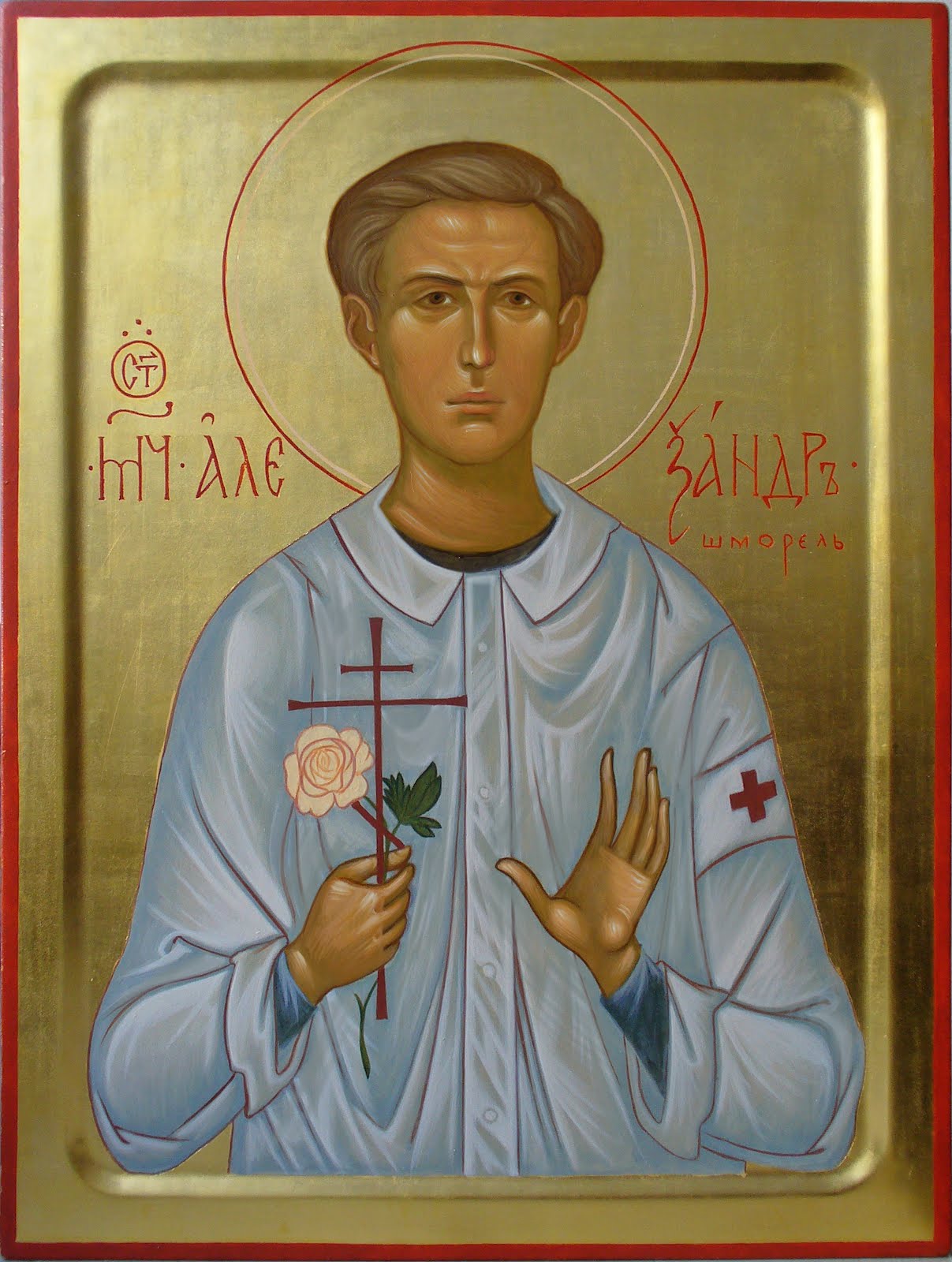 For the Novi Sad conference on “The Theology of Dialogue”, 7-10 November 2012